Peptides vs. Proteins: What’s the Difference?
Peptides vs. Proteins :If you have spent any time reading about skincare, fitness supplements, or even biology, you have probably come across the terms “peptides” and “proteins.” They sound similar, and they are related—but they are not the same thing.
Understanding the difference between peptides and proteins is more than just a science lesson. It can help you make better decisions about your skincare products, choose the right supplements, and understand how your body actually works.
This article breaks down everything you need to know about peptides and proteins—without the confusing jargon.
The Simple Explanation
Think of it this way:
- Amino acids are like individual letters.
- Peptides are like short words made from a few letters.
- Proteins are like long sentences or paragraphs made from many words.
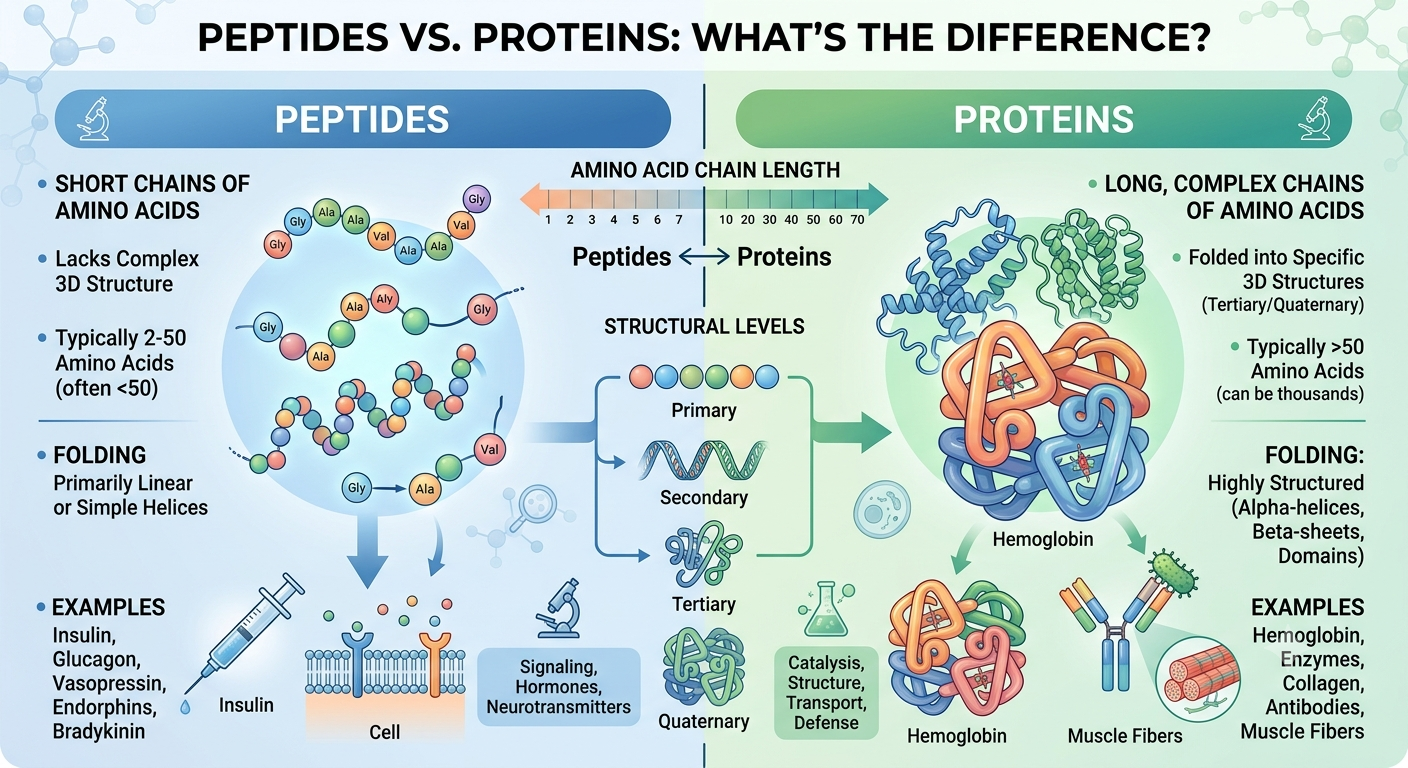
Peptides and proteins are both made of amino acids—the building blocks of life. The only difference is how many amino acids are linked together.
Key difference:
- Peptides = short chains of amino acids (typically 2 to 50 amino acids)
- Proteins = long chains of amino acids (typically 50 to thousands of amino acids)
Once a chain of amino acids gets longer than about 50, it is usually called a protein. Below that, it is a peptide.
What Are Amino Acids?
Before understanding peptides and proteins, it helps to know what amino acids are.
Amino acids are organic compounds that combine to form proteins. There are 20 standard amino acids that the human body uses to build proteins and perform various biological functions.
| Type | Description |
|---|---|
| Essential Amino Acids | Cannot be made by the body; must come from food |
| Non-Essential Amino Acids | Can be made by the body |
| Conditional Amino Acids | Usually non-essential but may become essential during illness or stress |
When amino acids link together in chains, they form peptides and proteins. The sequence and length of these chains determine their function.
What Are Peptides?
Peptides are short chains of amino acids, typically containing 2 to 50 amino acids linked by peptide bonds. They are smaller than proteins and can be found naturally in the body or manufactured synthetically for supplements and skincare products.
Types of Peptides
| Type | Function |
|---|---|
| Signal Peptides | Send signals to cells to perform specific functions, like producing collagen |
| Carrier Peptides | Deliver trace minerals to where they are needed |
| Enzyme-Inhibiting Peptides | Slow down the breakdown of collagen and elastin |
| Neurotransmitter-Inhibiting Peptides | Help relax facial muscles to reduce expression lines |
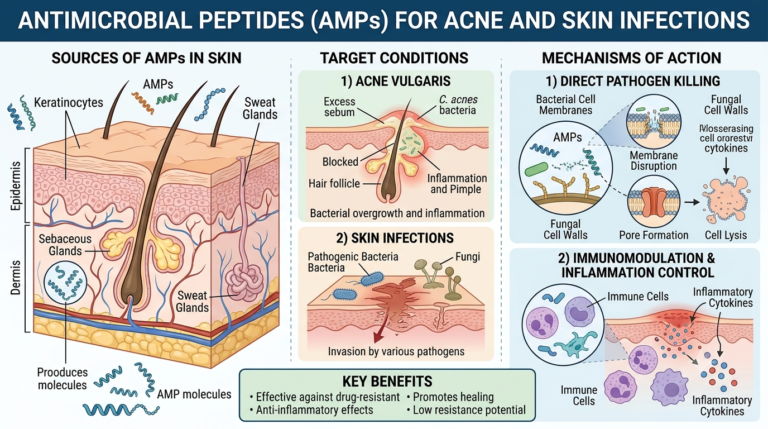
| Antimicrobial Peptides | Help fight bacteria and support the immune system |
Where Are Peptides Found?
Peptides are naturally present in the body, playing roles in hormone regulation, immune function, and cell signaling. They are also found in food, particularly in protein-rich sources like meat, fish, eggs, and dairy.
Common Uses of Peptides
- Skincare – Signal peptides in anti-aging creams tell skin cells to produce more collagen
- Fitness supplements – Peptides like creatine and collagen peptides are used for muscle recovery and joint health
- Hormone therapy – Some peptides are used in medical treatments
- Antibiotics – Certain peptides have antimicrobial properties
What Are Proteins?
Proteins are long chains of amino acids, typically containing 50 to thousands of amino acids linked by peptide bonds. They are large, complex molecules that perform a vast range of functions in the body.
Functions of Proteins in the Body
- Structural support – Collagen and keratin provide structure to skin, hair, nails, and connective tissue
- Enzymes – Catalyze biochemical reactions, including digestion and metabolism
- Hormones – Insulin and growth hormone regulate bodily functions
- Immune function – Antibodies are proteins that help fight infections
- Transport – Hemoglobin carries oxygen in the blood
Where Are Proteins Found?
Proteins are found throughout the body and are also obtained through diet. Dietary protein comes from:
- Animal sources – Meat, poultry, fish, eggs, dairy
- Plant sources – Beans, lentils, nuts, seeds, tofu, whole grains
Common Uses of Proteins
- Nutrition – Protein supplements (whey, casein, plant-based) support muscle growth and repair
- Skincare – Proteins like collagen and keratin are used in cosmetic products
- Medical treatments – Protein-based drugs include insulin and monoclonal antibodies
Key Differences Between Peptides and Proteins
| Feature | Peptides | Proteins |
|---|---|---|
| Length | Short chains (2-50 amino acids) | Long chains (50+ amino acids) |
| Size | Small molecules | Large, complex molecules |
| Structure | Simple chain structure | Often folded into complex 3D structures |
| Function | Signaling, communication, regulation | Broad range of functions (structural, enzymatic, hormonal, etc.) |
| Absorption | Absorbed more easily by the body | Broken down into peptides and amino acids before absorption |
| Skincare use | Can penetrate the skin’s outer layer | Too large to penetrate the skin effectively |
| Digestion | Digested quickly into amino acids | Takes longer to digest and break down |
Why the Difference Matters
In Skincare
This is where the difference between peptides and proteins really matters.
Proteins are too large to penetrate the skin’s outer layer. When you apply a cream with collagen (a protein), the collagen molecules sit on top of the skin. They can provide some hydration and temporary plumping, but they do not actually penetrate to stimulate new collagen production.
Peptides, on the other hand, are small enough to penetrate the skin’s barrier. They can reach deeper layers and send signals to skin cells, telling them to produce more collagen and elastin. This is why peptide-based skincare products are often marketed as anti-aging treatments.
In Supplements
When you consume protein, whether from food or a supplement, your digestive system breaks it down into smaller peptides and individual amino acids. These are then absorbed and used by your body.
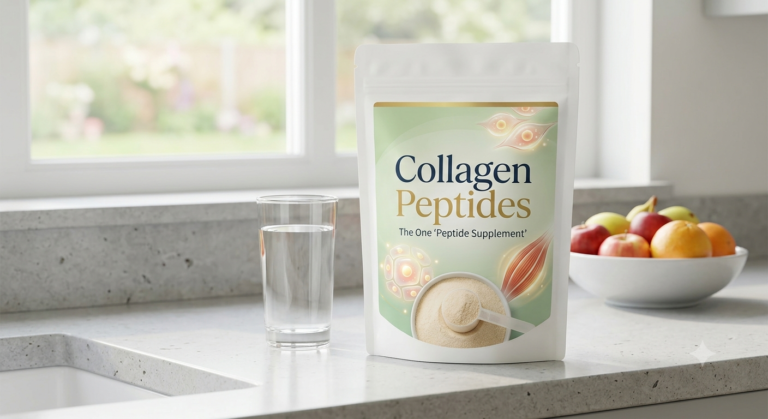
Peptide supplements are sometimes marketed as having faster absorption or specific benefits. For example, collagen peptides are a popular supplement because they contain shorter chains of amino acids that are easier for the body to absorb and use for connective tissue support.
In the Body
Peptides and proteins work together. Peptides often act as messengers, telling the body to produce or release proteins. For example, a peptide hormone signals the pancreas to release insulin, which is a protein.
Common Misconceptions
1. “All proteins are better than peptides.”
This is not true. Peptides and proteins serve different functions. A well-balanced diet includes both, and the choice depends on your goals.
2. “Collagen supplements are ineffective.”
Collagen supplements are broken down into peptides and amino acids in the digestive system, which are then used by the body to support connective tissue. While collagen itself is a protein, it is broken down into smaller peptides during digestion.
3. “Peptides are only for skincare.”
Peptides have many uses beyond skincare, including supplements, medical treatments, and research applications.
4. “More amino acids always means better.”
Longer does not always mean more effective. Peptides are often more bioactive because of their smaller size and ability to interact with receptors.
Peptides vs. Proteins: A Quick Comparison
| Aspect | Peptides | Proteins |
|---|---|---|
| Chain length | Short (2-50 amino acids) | Long (50+ amino acids) |
| Molecular weight | Lower (under 10,000 Da) | Higher (over 10,000 Da) |
| Function | Signaling, communication | Structural, enzymatic, transport |
| Skin penetration | Can penetrate | Cannot penetrate effectively |
| Absorption | Easily absorbed | Broken down before absorption |
| Examples | Collagen peptides, creatine, insulin | Collagen, keratin, enzymes, antibodies |
| Main uses | Skincare, supplements, signaling | Nutrition, structure, enzymes |
Frequently Asked Questions
Are peptides better than proteins for anti-aging?
Yes, for topical use. Peptides can penetrate the skin and stimulate collagen production, while proteins are too large to penetrate the skin’s outer layer.
Can I get enough peptides from food?
Yes. When you eat protein-rich foods, your body breaks the proteins down into peptides and amino acids during digestion.
Are peptide supplements safe?
Most peptide supplements are considered safe when used as directed. However, consult a healthcare provider before starting any new supplement.
What is collagen? Is it a peptide or a protein?
Collagen is a protein made up of long chains of amino acids. However, hydrolyzed collagen (collagen peptides) consists of shorter chains that are more easily absorbed.
Do peptides have side effects?
Peptides are generally well-tolerated. Some people may experience mild digestive discomfort or skin irritation, depending on the product.
Can I use peptides and proteins together?
Yes. In fact, they often work together. Peptides can stimulate collagen production, while proteins provide the building blocks your body needs.
What are the best sources of peptides in food?
Foods high in protein also provide peptides during digestion. Good sources include eggs, fish, meat, dairy, beans, and lentils.
Are peptides natural or synthetic?
Peptides can be both. They exist naturally in the body and in food, but they can also be manufactured synthetically for supplements and skincare products.
Final Thoughts
Peptides and proteins are both essential for human health, but they are not interchangeable. Understanding the difference can help you choose the right skincare products, pick the right supplements, and better understand how your body works.
The bottom line:
- Peptides are short chains of amino acids that send signals, trigger responses, and are easily absorbed.
- Proteins are long chains that provide structure, catalyze reactions, and perform a wide range of biological functions.
Whether you are choosing a collagen supplement, an anti-aging serum, or just learning about how your body works, knowing the difference between peptides and proteins will serve you well.

2 Comments