Does TRT Raise Blood Pressure? 2026 Research Review
Does TRT Raise Blood Pressure:Testosterone Replacement Therapy (TRT) has become one of the most widely discussed treatments in men’s health. Millions of men use it to combat the symptoms of low testosterone—fatigue, low libido, mood changes, and loss of muscle mass.
But a question that consistently comes up is: Does TRT raise blood pressure?
The answer is more nuanced than a simple yes or no. The medical evidence has been conflicting, with some studies showing increases, others showing decreases, and many showing no significant effect at all. However, recent research and updated FDA guidelines have provided much-needed clarity.
This 2026 research review examines what the latest science actually says about TRT and blood pressure.
The Conflicting Evidence: Why the Data Has Been Split
For years, the medical literature on TRT and blood pressure has been divided. Understanding why helps explain the current consensus.
Studies showing a decrease: Several studies, particularly those involving men with classic hypogonadism, have shown that restoring testosterone to normal levels can actually lower blood pressure. Research has found that testosterone undecanoate was associated with significant reductions in systolic, diastolic, and pulse pressure. Testosterone replacement therapy has been shown to reduce waist circumference, blood glucose, triglycerides, and blood pressure while improving HDL cholesterol. This effect is thought to come from improved vascular function and a reduction in central adiposity.
Studies showing an increase: Conversely, other studies have reported that TRT is associated with a rise in blood pressure. Some research found that testosterone replacement was linked to a higher risk of hypertension. A 2022 meta-analysis reported a 7.9% higher risk of hypertension with TRT.
Studies showing no significant effect: A significant body of research has found no meaningful change in blood pressure with TRT. A 2025 meta-analysis of randomized controlled trials concluded that TRT was not associated with a significant risk of hypertension. The updated meta-analysis published in the Journal of the American College of Cardiology (JACC) in 2025 found that testosterone replacement therapy was not associated with cardiovascular risks in men with hypogonadism or a high risk of cardiovascular disease.
This inconsistency has been a major source of confusion for both patients and clinicians.
What the 2025-2026 Research Shows
To cut through the noise, it is important to look at the most robust and recent data.
The 2025 JACC Meta-Analysis
An updated meta-analysis published in the Journal of the American College of Cardiology (JACC) in 2025 reviewed randomized controlled trials and found that TRT was not associated with an increased risk of hypertension. The analysis found no significant differences compared to placebo regarding all-cause mortality, cardiac mortality, hypertension, or prostate cancer.
This is a significant finding. It suggests that for most men, TRT does not lead to a clinically meaningful increase in blood pressure. The authors concluded that testosterone replacement therapy was not associated with cardiovascular risks in men with hypogonadism or those at high risk of cardiovascular disease.
Small, Real-World Increases
While TRT may not cause clinical hypertension, it can lead to a slight, measurable increase in blood pressure for some men. A 2024 meta-analysis found that some studies reported minor increases in systolic blood pressure (SBP), with a mean increase of approximately 2.8 mmHg.
While statistically significant, a 2.8 mmHg increase is generally considered clinically insignificant in a healthy individual. However, for men with pre-existing hypertension or other cardiovascular risk factors, even small increases warrant attention.
The Role of Hematocrit
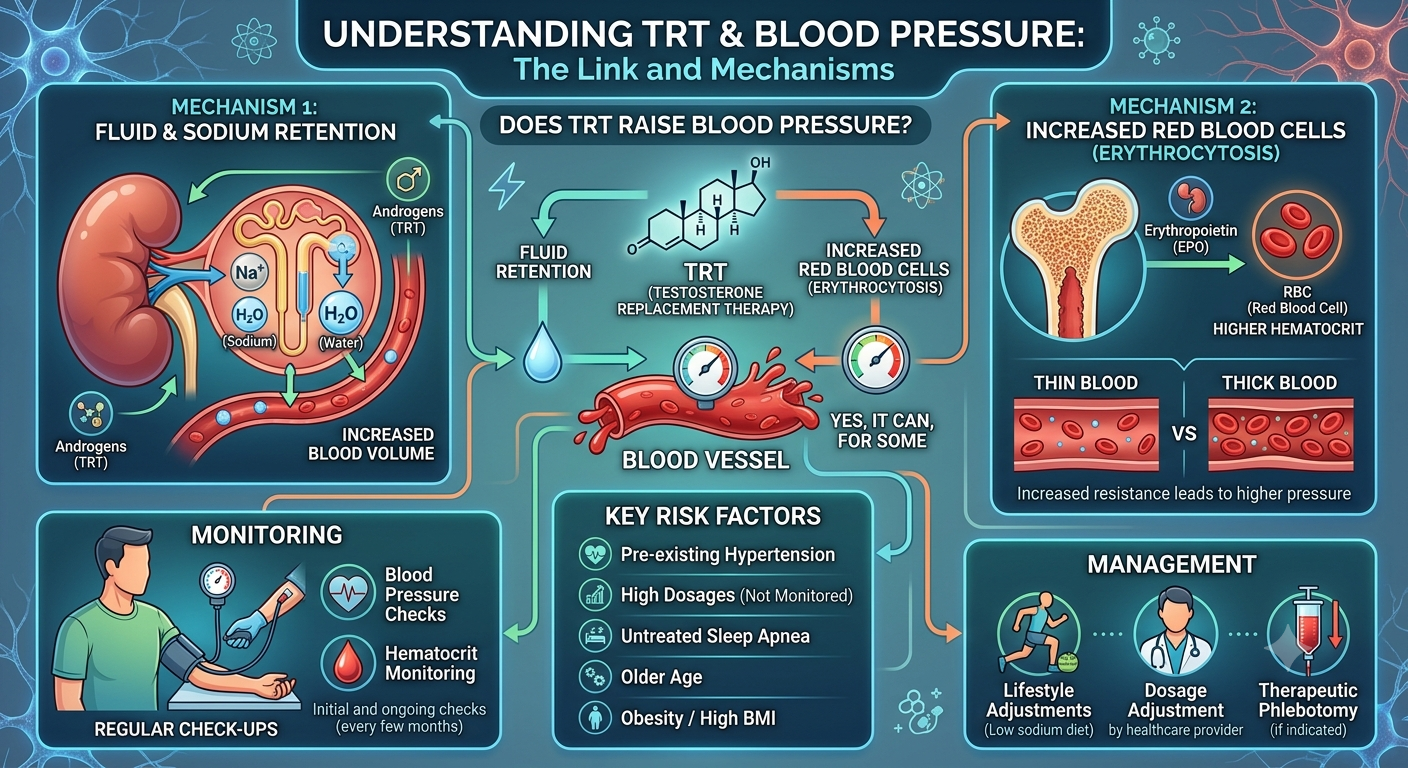
The most important factor linking TRT to blood pressure elevation is a rise in hematocrit—the proportion of red blood cells in the blood.
Testosterone stimulates red blood cell production, which can thicken the blood and increase its viscosity. A double-blind, randomized, placebo-controlled trial found that TRT was associated with higher blood pressure and that this increase was directly linked to higher hematocrit levels.
The study demonstrated that small increases in ambulatory blood pressure occurred following testosterone therapy, and hematocrit may aid in predicting the development of blood pressure increases on testosterone therapy. Men with obesity or red blood cell levels in the upper normal range are more susceptible to increased daytime systolic blood pressure during TRT.
This means that men who experience a significant jump in their red blood cell count are the ones most likely to see a rise in their blood pressure. Regular monitoring of both blood pressure and hematocrit is essential.
FDA Label Changes: What They Mean
In a landmark move, the US Food and Drug Administration (FDA) updated testosterone product labeling in February 2025.
The key changes were:
- The boxed warning for major cardiovascular events was removed. This reflected growing evidence that TRT does not increase the risk of heart attacks or strokes.
- A class-wide warning regarding blood pressure increases was added. The FDA stated that results from completed ambulatory blood pressure (ABPM) studies confirmed an increase in blood pressure with use of all testosterone products, class-wide.
This means the FDA officially recognizes that blood pressure can increase with TRT. However, this increase is not considered as serious a risk as the previously feared major cardiac events.
The FDA’s decision was based on findings from postmarket ambulatory blood pressure studies. Use of oral and subcutaneous testosterone products were associated with an average increase in systolic blood pressure of about 4 mm Hg and a diastolic rise of 1-1.5 mm Hg.
Importantly, long-term studies including TRAVERSE, T4DM, and T-Trials have not demonstrated blood pressure increases at periods of one year or greater. This suggests that any blood pressure elevation may be most pronounced early in treatment and may stabilize over time.
Who Is Most at Risk for Blood Pressure Elevation?
Not everyone on TRT will see a rise in their blood pressure. The risk is higher for men who:
- Have pre-existing hypertension: Men who already have high blood pressure are more likely to experience further increases during TRT.
- Are obese or have sleep apnea: Obesity and untreated sleep apnea are significant risk factors for both hypertension and a more exaggerated response to TRT.
- Experience a significant rise in hematocrit: As mentioned above, a large increase in red blood cell count is the primary driver of TRT-related blood pressure elevation.
- Use certain formulations: Some studies suggest that the risk of blood pressure elevation can vary depending on the formulation. Injectable forms may lead to more significant spikes in testosterone levels, which could theoretically have a greater impact on blood pressure. Oral and subcutaneous testosterone products were associated with an average increase in systolic blood pressure of about 4 mm Hg.
What the Research Says About Testosterone and Blood Pressure
A 2026 review published in the Journal of Hypertension found that testosterone therapy affects systolic and diastolic blood pressure, as well as heart rate, throughout the day. The authors emphasized that regular assessment of blood pressure in patients during testosterone treatment is very important to prevent cardiovascular complications.
Other studies have shown that testosterone treatment does not significantly increase the risk of developing cardiovascular disease. A Mendelian randomization study of 337,159 European users found that testosterone gel did not increase the risk of cardiovascular disease, including stroke, coronary heart disease, and hypertension.
TRT within physiological ranges has not consistently been shown to increase blood pressure significantly and may, in some cases, have a positive effect. While extremely high doses of testosterone might elevate blood pressure, TRT administered within physiological ranges generally does not cause clinically significant increases in blood pressure in most men.
Practical Recommendations for Men on TRT
The evidence does not suggest that TRT should be avoided due to blood pressure concerns. However, it does highlight the need for careful monitoring and proactive management.
1. Regular Blood Pressure Monitoring
Men on TRT should check their blood pressure regularly. This can be done at home with a reliable monitor or at a doctor’s office. The FDA’s labeling change underscores the importance of this monitoring.
2. Monitor Your Hematocrit
Routine blood work is essential for anyone on TRT. Keeping an eye on your hematocrit is crucial. If it rises too high (generally above 52%), a doctor may recommend therapeutic phlebotomy (donating blood) to lower it. Studies have shown that hematocrit levels can help predict the development of blood pressure increases on testosterone therapy.
3. Manage Lifestyle Factors
A healthy diet, regular exercise, and maintaining a healthy weight are the most effective ways to keep both testosterone levels and blood pressure in a healthy range. These lifestyle factors also reduce the risk of obesity and sleep apnea, which are risk factors for hypertension during TRT.
4. Work Closely with Your Doctor
The key is a partnership with a healthcare provider who understands the nuances of TRT and can adjust the dosage or treatment plan based on your individual response. If patients experience mild elevations in blood pressure with testosterone replacement therapy, medication could help relieve hypertension.
Summary Table: TRT and Blood Pressure
| Factor | Finding |
|---|---|
| 2025 JACC Meta-Analysis | TRT not associated with increased risk of hypertension |
| FDA Labeling (2025) | Boxed warning for MACE removed; class-wide warning for blood pressure increases added |
| Average BP Increase | ~4 mmHg systolic, 1-1.5 mmHg diastolic (oral/subcutaneous forms) |
| Key Driver | Rise in hematocrit (red blood cell count) |
| Long-Term Studies | No BP increases at 1 year or greater (TRAVERSE, T4DM, T-Trials) |
| Highest Risk Groups | Pre-existing hypertension, obesity, sleep apnea, significant hematocrit rise |
| Recommended Monitoring | Regular blood pressure and hematocrit checks |
Bottom Line: Should You Be Concerned?
The most up-to-date, high-quality evidence suggests that TRT is not a significant cause of clinical hypertension for most men. While it can lead to a modest increase in blood pressure for some individuals—primarily driven by a rise in red blood cell production—the risk is manageable with proper monitoring.
In many cases, particularly for men with low baseline testosterone, TRT can even lead to improvements in cardiovascular risk factors and blood pressure. The key to a safe and effective TRT experience is not avoiding the therapy, but engaging in proactive monitoring and partnering with a knowledgeable healthcare provider.
The FDA’s 2025 labeling changes reflect this balanced view: the boxed warning for major cardiovascular events was removed, while a warning about blood pressure increases was added. This acknowledges that blood pressure can rise with TRT, but this increase is not as serious as the previously feared major cardiac events.
The bottom line: TRT can raise blood pressure in some men, but for most, the effect is modest and manageable. Regular monitoring of both blood pressure and hematocrit, along with a healthy lifestyle and close communication with your doctor, are the keys to a safe and effective TRT experience.
Disclaimer: This article is for informational purposes only and does not constitute medical advice. Always consult a qualified healthcare professional before starting, stopping, or changing any medication or treatment.
Read also