Peptides in Skincare: Separating Science from Marketing Hype
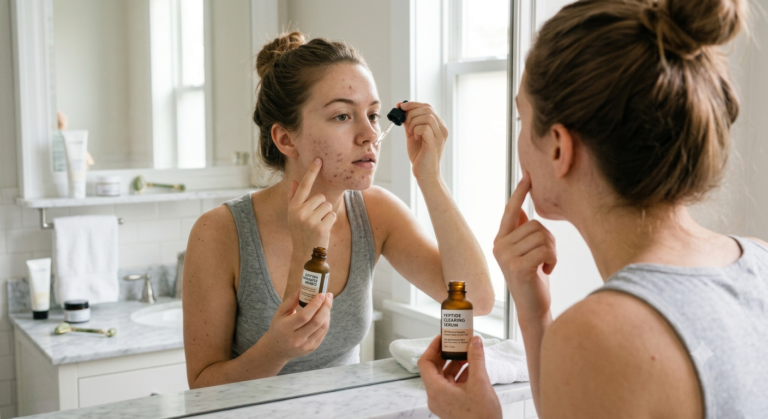
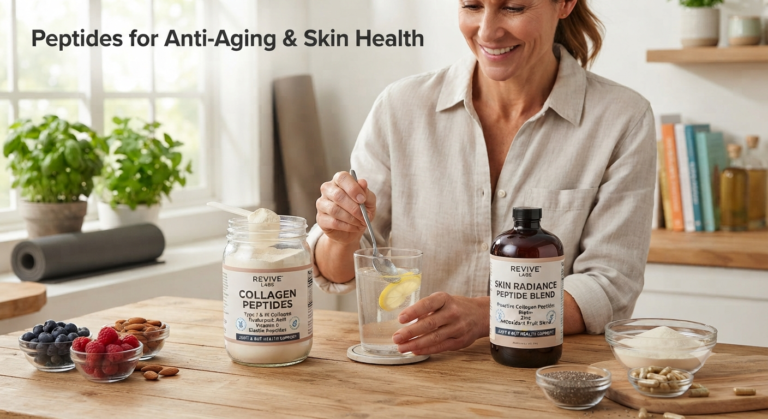
Peptides are everywhere in skincare right now. Serums, creams, eye treatments—you name it, chances are there’s a “peptide-infused” version on the shelf. The promises are bold: firmer skin, fewer wrinkles, a more youthful appearance. But is the science actually there, or is this just another marketing trend?
Here’s what you actually need to know.
What Are Peptides, Really?
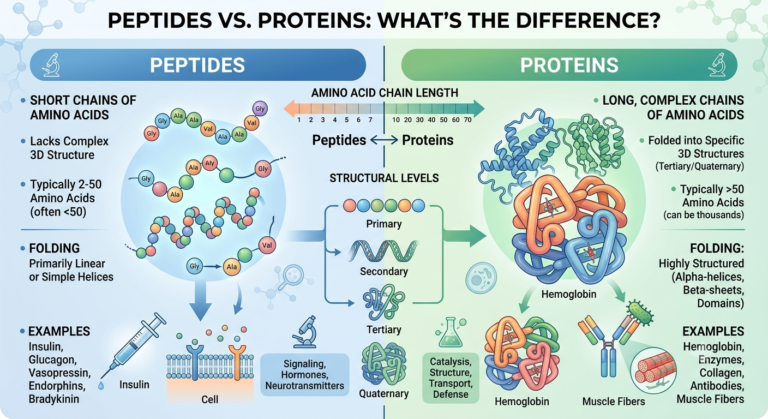
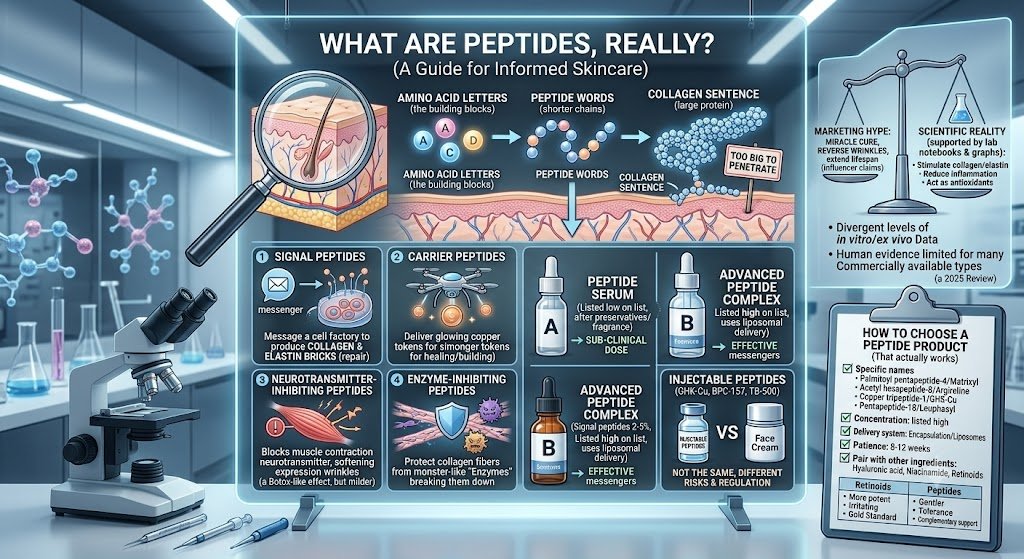
At their most basic level, peptides are short chains of amino acids—the building blocks of proteins. Think of it this way: amino acids are like individual letters, peptides are words, and proteins are full sentences.
In your skin, proteins like collagen and elastin are responsible for firmness and elasticity. As you age, your body produces less of these proteins, which leads to wrinkles, sagging, and loss of that youthful bounce.
Peptides in skincare are designed to act as messengers. They send signals to your skin cells, telling them to perform specific functions—like producing more collagen.
The key distinction: peptides are not the same as collagen. Collagen is a large protein molecule that’s too big to penetrate the skin’s surface. Peptides, being much smaller, can actually get in and do the work.
How Do Peptides Actually Work?
There are several different types of peptides used in skincare, each with a specific job:
1. Signal Peptides
These are the most common type. They send signals to skin cells, particularly fibroblasts, to increase collagen and elastin production. Essentially, they wake up your skin and tell it to start repairing itself.
2. Carrier Peptides
These act like delivery vehicles. They carry trace minerals—like copper—to the skin cells that need them for collagen building and wound healing.
3. Neurotransmitter-Inhibiting Peptides
These work by partially blocking the release of acetylcholine, the neurotransmitter responsible for muscle contractions. The result? A Botox-like effect that can soften expression lines, but in a milder, topical form.
4. Enzyme-Inhibiting Peptides
These help slow down the breakdown of collagen and elastin by inhibiting the enzymes that degrade them.
What Does the Science Actually Say?
Here’s where things get interesting—and a bit complicated.
The good news: Research has broadly confirmed that certain peptides can stimulate collagen and elastin production, reduce inflammation, and act as antioxidants. Clinical trials and lab studies have backed these benefits, making peptides one of the better-evidenced anti-ageing skincare ingredients available.
A 2025 randomized, double-blind, placebo-controlled clinical trial found that collagen peptide supplementation significantly improved skin structure and moisture in healthy adults. Another study on a multi-peptide complex demonstrated visibly improved skin elasticity and reduced wrinkles within just four weeks of application.
Some newer peptides are even being compared to retinol, the gold standard of anti-ageing treatments. A novel cyclic peptide recently outperformed retinol in a clinical trial, showing significant anti-ageing effects with potentially better tolerability.
The catch: For many peptides promoted for anti-ageing and skin health, high-quality human evidence remains limited. A 2025 review found that the efficacy of commercially available peptides is supported by “divergent levels of in vitro and ex vivo data”. This means a lot of evidence comes from test-tube or skin sample studies, not necessarily large-scale human clinical trials.
The Marketing Hype: What Brands Won’t Tell You
The excitement around peptides has led to a wave of marketing that often outpaces the science.
1. The “Miracle Cure” Narrative
Social media is flooded with influencers touting peptides as a “miracle cure-all”. Claims range from reversing wrinkles to building muscle and even extending lifespan.
The reality? Peptides are effective support ingredients, but they’re not magic. Dr. Shasa Hu, a cosmetic dermatologist, notes that while peptides “work,” they are “not the miracle others want you to think”.
2. The Penetration Problem
One of the biggest scientific hurdles is getting peptides to actually penetrate the skin. Peptides are fragile molecules that can be broken down by enzymes before they reach their target.
Formulators have developed various delivery systems—like liposomes and encapsulation—to improve penetration, but not all products use these technologies. A cheap peptide serum may not deliver peptides deep enough to do anything meaningful.
3. The Dosing Question
Many products contain peptides, but at what concentration? Research suggests that signal peptides are most effective at a 2 to 5% concentration and require consistent application for at least 8 to 12 weeks to see visible results.
If a product lists peptides near the bottom of the ingredient list—after preservatives and fragrance—you’re likely not getting a clinically meaningful dose.
4. Injectable vs. Topical Confusion
There’s a significant difference between topical skincare peptides and injectable peptide therapies. Injectable peptides like GHK-Cu, BPC-157, and TB-500 are often promoted for tissue repair and anti-ageing, but high-quality human evidence for many of these remains limited.
These are not the same as the peptides in your face cream, and they carry different risks and regulatory considerations.
How to Choose a Peptide Product That Actually Works
If you’re going to invest in peptides, here’s how to separate the good from the gimmicky:
1. Look for Specific Peptide Names
Brands that are serious about their formulas will tell you exactly which peptides they’re using:
- Palmitoyl pentapeptide-4 (Matrixyl): One of the most studied signal peptides
- Acetyl hexapeptide-8 (Argireline): A neurotransmitter-inhibiting peptide
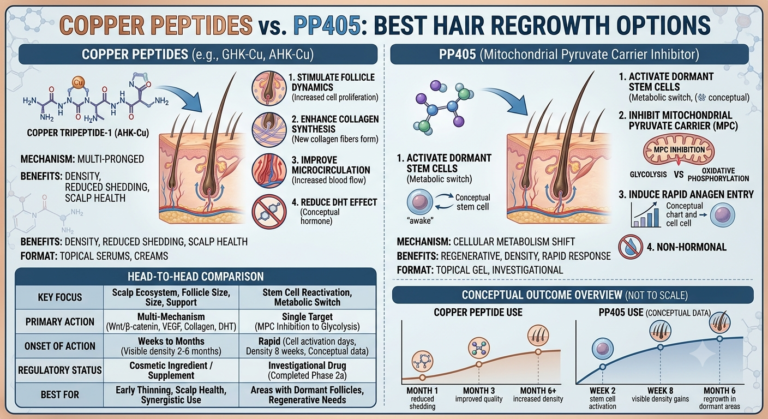
- Copper tripeptide-1 (GHK-Cu): A carrier peptide with wound-healing properties
- Pentapeptide-18 (Leuphasyl): A neuromodulatory peptide that can help soften expression lines
2. Check the Concentration
Look for products where peptides are listed in the first half of the ingredient list. Some brands will also state the percentage concentration on the label.
3. Consider the Delivery System
Peptides are fragile. Look for products that use liposomal delivery, encapsulation, or other technologies designed to protect peptides from degradation.
4. Be Patient
Peptides are not instant. They work gradually over weeks and months. Consistent application is key—most studies show visible improvements after 8 to 12 weeks of daily use.
5. Pair with Other Ingredients
Peptides work well with other skin-supporting ingredients. Hyaluronic acid helps with hydration, niacinamide supports barrier function, and retinoids remain the gold standard for anti-ageing.
Peptides vs. Retinoids: Which Is Better?
This is a common question, and the answer depends on your skin’s needs and tolerance.
| Peptides | Retinoids | |
|---|---|---|
| Effectiveness | Moderate anti-ageing benefits | High anti-ageing benefits |
| Tolerability | Generally well-tolerated, minimal irritation | Can cause peeling, redness, and irritation |
| Evidence | Growing, but mixed | Extensive, gold standard |
| Onset of results | Gradual (8-12 weeks) | Gradual (3-6 months) |
Retinoids remain the most effective topical anti-ageing ingredient available. But they’re not for everyone—many people can’t tolerate the irritation. Peptides offer a gentler alternative that still provides meaningful benefits.
The best approach? Many dermatologists recommend using both. Peptides during the day (they’re gentle and play well with other ingredients) and retinoids at night.
The Bottom Line
Peptides are not a miracle cure, but they are a legitimate, science-backed skincare ingredient. They can stimulate collagen production, improve skin firmness, and reduce the appearance of fine lines—especially when used consistently over time.
The hype, however, often outstrips the evidence. Not all peptide products are created equal, and many formulations don’t contain enough of the right peptides to make a meaningful difference.
What to do: Look for products that specify which peptides they contain, check the concentration, be patient with results, and don’t expect peptides to replace retinoids or professional treatments. Used wisely, peptides can be a valuable addition to a well-rounded skincare routine. But they’re not the magic bullet that social media might have you believe.
Disclaimer: This article is for informational purposes only and does not constitute medical advice. Always consult a dermatologist or healthcare professional before starting any new skincare regimen.