Bioactive Peptides in Sports Nutrition and Muscle Recovery
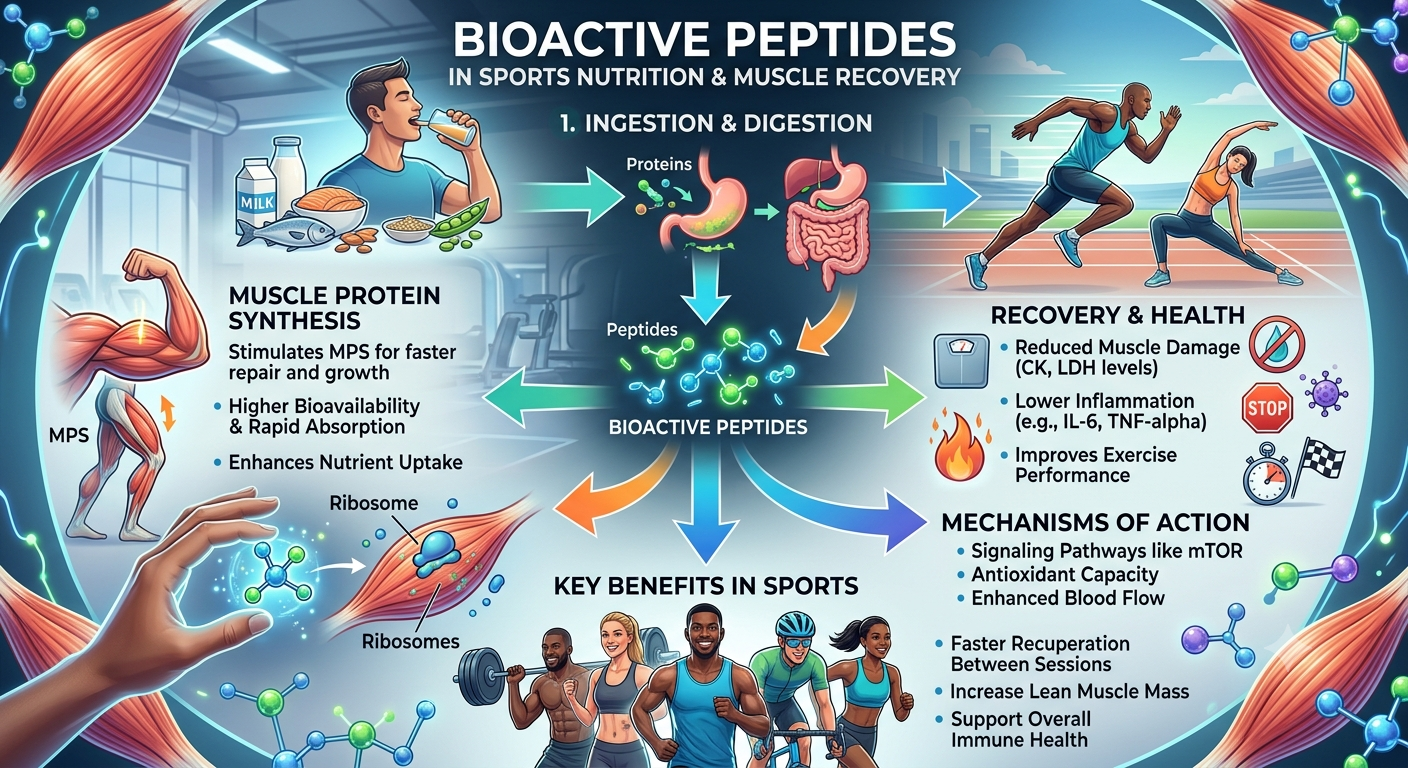
Bioactive Peptides in Sports Nutrition :Bioactive peptides have emerged as one of the most promising frontiers in sports nutrition, offering a natural, targeted approach to accelerating muscle recovery, reducing exercise-induced fatigue, and optimizing athletic performance. These short chains of amino acids—typically 2 to 50 residues long—are derived from various protein sources and exert specific physiological effects beyond basic nutrition .
Unlike intact proteins that require extensive digestion, bioactive peptides are absorbed more rapidly and can directly influence metabolic pathways involved in muscle repair, energy production, and inflammation control . This makes them particularly valuable for athletes and fitness enthusiasts seeking efficient recovery solutions.
The Mechanisms: How Peptides Support Muscle Recovery
Combating Oxidative Stress
High-intensity exercise triggers a substantial increase in reactive oxygen species (ROS) production. When ROS generation exceeds the body’s antioxidant defense capacity, oxidative stress occurs—damaging cellular structures including lipids, proteins, and DNA .
Bioactive peptides exert their effects through multiple antioxidant pathways. Research on Spirulina-derived peptides, for instance, demonstrates that different molecular weight fractions exhibit distinct antioxidant characteristics. The low-molecular-weight fraction (200–600 Da) shows rapid radical-scavenging activity, while higher-molecular-weight fractions (1000–1500 Da) provide more sustained antioxidant protection .
A study on sheep skin collagen peptides found they reduce oxidative damage by activating the NRF2/HO-1 axis, promoting nuclear accumulation of NRF2 protein and increasing expression of antioxidant enzymes like SOD and GSH-Px. This led to reduced malondialdehyde (MDA) accumulation and enhanced mitochondrial function .
Regulating Inflammation
Exercise-induced muscle damage triggers a local inflammatory response essential for repair—but when inflammation becomes excessive or prolonged, it can delay recovery . Bioactive peptides help modulate this inflammatory balance.
Research on ovalbumin-derived peptides shows they can restore levels of inflammatory markers—including IL-6, IL-1β, and TNF-α—to normal levels in damaged muscle cells . This anti-inflammatory action helps protect muscle tissue while still allowing necessary repair processes to proceed.
Enhancing Energy Metabolism
Energy depletion is central to exercise fatigue. Bioactive peptides improve energy metabolism through several mechanisms:
AMPK Pathway Activation: AMP-activated protein kinase (AMPK) serves as a cellular energy sensor. When activated, it promotes mitochondrial biogenesis and energy production. Sheep skin collagen peptides increased AMPK and PGC-1α expression at both gene and protein levels, enhancing ATP content in muscle cells . Similarly, Spirulina-derived peptides were shown to upregulate AMPK-related readouts, improving endurance performance and reducing blood lactate accumulation .
Improved Glycogen Utilization: Peptides help optimize glycogen storage and utilization during exercise. Plant-derived bioactive peptides have demonstrated the ability to accelerate glycogen resynthesis, extending time to exhaustion .
Mitochondrial Support: By reducing oxidative damage and promoting mitochondrial function, peptides help maintain the cellular energy production that sustains athletic performance .
Promoting Muscle Protein Synthesis
Several peptides directly stimulate muscle protein synthesis, the process by which muscle tissue repairs and grows. Ovalbumin-derived peptides were found to activate the PI3K-Akt-mTOR signaling pathway—a key regulator of protein synthesis in muscle cells. The peptide SRPILPIVLK (SK-10) increased C2C12 cell viability from 73.33% to 85.15% in a model of muscle atrophy .
Sources of Bioactive Peptides
Plant-Derived Peptides
Plant-derived bioactive peptides (PBPs) have gained attention for their safety profile and multi-targeted mechanisms . Key sources include:
Spirulina: Enzymatic hydrolysis produces peptides rich in glutamic acid and aspartic acid, with demonstrated anti-fatigue effects in animal models .
Soy and Legumes: Peptides from soybean and other legumes stimulate muscle protein synthesis, promoting both recovery and growth .
Corn: Corn peptides have shown significant anti-fatigue activity and may modulate gut microbial composition .
The growing interest in plant-based sports nutrition reflects consumer demand for sustainable, effective recovery solutions .
Marine-Derived Peptides
Marine environments offer a rich source of bioactive peptides with unique properties . Marine proteins are easily digested, contain well-balanced amino acid profiles, and exhibit antioxidant, anti-inflammatory, and metabolism-modulating activities .
Fish Collagen Peptides: These support connective tissue strengthening and muscle recovery. Fish protein hydrolysates also display antioxidant, ACE-inhibitory, and immune-modulatory properties .
Shellfish Peptides: Crustaceans, mollusks, and other shellfish provide bioactive peptides with antibacterial, opioid, and immunomodulatory activities .
Marine Microalgae: Peptides from microalgae are rich in antioxidants like glutathione and carnosine .
Animal-Derived Peptides
Collagen Peptides: Clinical research consistently supports collagen peptide supplementation for musculoskeletal health. A 12-week study in untrained middle-aged men found that 15g of collagen peptides combined with resistance training significantly decreased fat mass and increased muscle strength compared to placebo .
In a separate study, participants receiving collagen peptides (10–20g/day for 6–9 months) showed improvements in daily living activities, pain reduction, and mental health scores .
Whey and Casein Peptides: Dairy-derived peptides, particularly lactotripeptides (valine-proline-proline and isoleucine-proline-proline), function as ACE inhibitors that improve blood flow and nitric oxide bioavailability, enhancing performance .
Ovalbumin Peptides: Egg white-derived peptides demonstrate muscle repair activity by binding to FGFR1 receptors and activating downstream protein synthesis pathways .
Injectable Peptides: A Controversial Adjunct
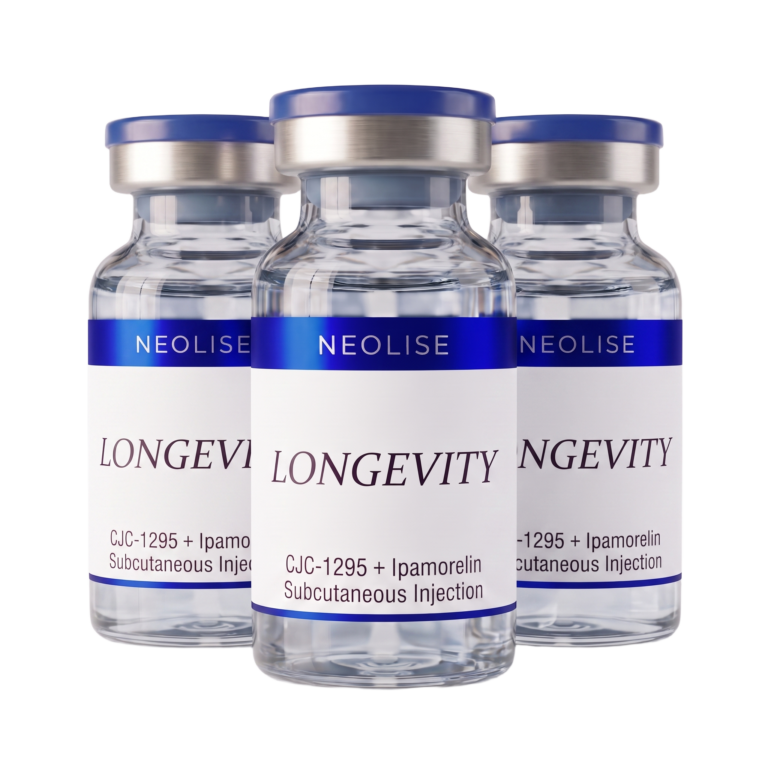
In addition to dietary peptides, injectable therapeutic peptides have gained attention in sports performance and regenerative medicine circles . Of these, BPC-157 (Body Protection Compound-157) has generated the most interest among athletes. Early in vivo research suggests it may optimize endurance training, metabolism, recovery, and tissue repair by enhancing fibroblast activity, stimulating collagen synthesis, and upregulating skeletal muscle protein synthesis .
However, significant concerns exist. As of 2024, only two small studies in the orthopedic literature have investigated therapeutic peptides for sports medicine, both with methodological limitations . BPC-157 is currently prohibited by the World Anti-Doping Agency and all NCAA and professional anti-doping agencies .
The authors of a 2024 review concluded: “Currently, we do not recommend the use of BPC-157 for sports performance and recovery because there are no randomized controlled trials investigating its use in human subjects, and the science is clearly lacking to determine the overall effectiveness, safety profile, and clinical indications for sports enhancement in athletes” .
Evidence from Clinical Research
Collagen Peptide Clinical Trials
A randomized controlled trial involving 120 overweight men demonstrated that 15g of collagen peptide supplementation over 12 weeks, combined with resistance training, significantly increased fat-free mass (3.42 ± 2.54 kg) and decreased fat mass (−5.28 ± 3.19 kg) compared to placebo. Muscle strength improved across all participants, with the collagen peptide group showing the highest increment .
Another study found that 10g/day of collagen peptides over 3–9 months improved daily living activities (p=0.031) and pain scores (p=0.037), with 20g/day particularly beneficial for female participants’ physical component scores (p=0.013) .
Dairy Peptide Research
Lactotripeptides (VPP and IPP) have been studied for their performance-enhancing effects through nitric oxide pathways. ACE inhibition leads to less vasoconstriction, increasing endothelial nitric oxide synthase activity. In a randomized double-blind placebo-controlled trial, four weeks of supplementation at 3.4 mg per day improved circulation and increased thigh circumference before and after exercise .
Animal Studies
Sheep skin collagen peptides extended exhaustive swimming time by 55% in mice, primarily through AMPK/PGC-1α pathway activation and NRF2/HO-1-mediated antioxidant protection. Treated mice showed increased slow-twitch muscle fibers—which are more resistant to fatigue—and enhanced energy metabolism .
Gaps and Future Directions
The Bioavailability Challenge
Despite promising evidence, significant challenges remain :
- Variability in Efficacy: Food-derived peptides show considerable variability in in vivo effects, suggesting molecular structural characteristics and delivery mechanisms are critical determinants .
- Standardized Dosages: The lack of standardized dosages makes comparing study results and developing effective protocols difficult .
- Human Clinical Trials: Most evidence on many peptide sources remains preclinical; more human clinical trials are needed .
- Structure-Activity Relationships: The relationship between peptide molecular weight, sequence, and specific biological functions remains inadequately understood .
Practical Implications for Athletes
For Dietary Supplementation: Collagen peptides (10–15g daily) have the strongest clinical support for muscle recovery and joint health. Combining them with resistance training appears particularly effective .
For Plant-Based Athletes: Spirulina, soy, and corn-derived peptides offer natural recovery options with antioxidant properties .
For Performance Enhancement: Lactotripeptides may offer blood flow and endurance benefits through nitric oxide pathways .
The Bottom Line
Bioactive peptides represent a scientifically promising category of sports nutrition ingredients, with the strongest evidence supporting collagen peptides for muscle recovery and joint health, plant-derived peptides for antioxidant and anti-fatigue effects, and marine peptides for connective tissue support. However, the lack of standardized dosing and limited human clinical trials on many peptide sources warrants cautious interpretation of current evidence.
The distinction between dietary peptides (supplements) and injectable therapeutic peptides (experimental compounds) is crucial—the latter remain unapproved by regulatory agencies and carry significant safety and legal risks for athletes. For most individuals, evidence-based dietary peptide supplementation offers a safer, more accessible path to supporting training adaptation and recovery.
Read also
Peptides for Bodybuilding: The Complete Research-Based Guide (2026)