Oral Peptides: Which Peptides Actually Work Without Injections (2026)
The needle has long been the price of admission for peptide therapy. For years, if you wanted the metabolic, performance, or therapeutic benefits of peptide-based drugs, you had to accept regular injections. But 2026 is shaping up to be the year that changes everything.
Recent FDA approvals, breakthrough clinical data, and innovative delivery platforms are finally making the promise of oral peptides a reality. The question is no longer if oral peptides work, but which ones actually deliver results—and which are still science experiments.
What Are Oral Peptides?
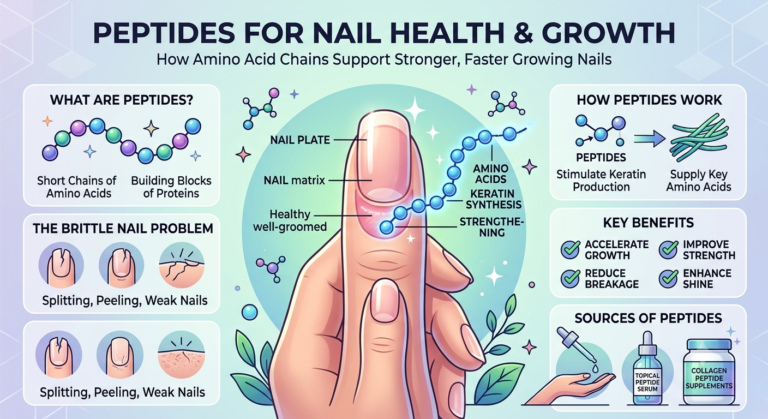
Peptides are short chains of amino acids—typically 5 to 50 residues, with a molecular weight at or below about 5,000 daltons—that act as signaling molecules for processes like tissue repair, metabolism, inflammation, and hormone release. “Oral” simply describes the route of administration: swallowing a capsule, tablet, or liquid peptide formula rather than injecting it subcutaneously.
In practice, the phrase “oral peptides” gets stretched to cover a whole family of non-injectable peptides. Swallowed formats include capsules, tablets, and drinkable peptide drops that go through the digestive tract. Sublingual peptides are drops or tablets held under the tongue so the molecule absorbs through the mucous membrane and skips the stomach. Buccal peptides are films or lozenges absorbed through the inner cheek. Nasal and other mucosal routes are technically not oral, but are grouped with needle-free delivery because they avoid injections.
The distinction matters because “oral” and “needle-free” are not the same promise. A product can be genuinely needle-free—a nasal spray, for example—while being a poor candidate for actually being swallowed. When you see liquid peptides marketed as an injectable alternative, the real question is always the same: can this specific molecule survive and absorb by this specific route?
Why Most Peptides Fail Orally: The Bioavailability Problem
Bioavailability is the share of a dose that reaches the bloodstream in active form. For injected peptides it is high. For most swallowed peptides it is close to zero, and three barriers explain why.
Stomach acid is the first obstacle. The low pH of the stomach chemically degrades many peptide bonds before absorption can begin. Digestive enzymes present the second barrier. Proteases such as pepsin and trypsin exist specifically to break proteins and peptides into fragments—they do not distinguish a therapeutic peptide from dinner. Low gut permeability is the third challenge. Even a surviving peptide is usually too large and too water-loving to cross the intestinal wall efficiently.
This is why injection has been the default for decades, and why orally delivered peptides make up only about 4% of total peptide use. The peptides that have cracked the oral route generally did it with engineering, not luck. Oral semaglutide is co-formulated with SNAC, an absorption enhancer that locally raises pH and helps the molecule cross the stomach lining. Oral octreotide (Mycapssa), approved in 2020, uses its own transient permeation enhancer technology. The lesson for anyone evaluating oral peptide supplements: delivery technology is the whole game, and most raw research liquid peptides have none of it.
Needle-Free Delivery Formats Explained
If you want to avoid injections, it helps to know what each needle-free format actually does. These are the routes you will see behind labels like oral peptide drops, liquid peptide blends, or nasal sprays.
Oral capsules and tablets are convenient and familiar, but subject to every gut barrier unless the peptide is inherently stable or paired with an absorption enhancer. Liquid peptide drops (swallowed) are easy to dose and adjust, and “ready to use” appeals to people who dislike reconstitution—but a drop that is swallowed faces the same degradation as a capsule. Sublingual drops and tablets are held under the tongue and can absorb through mucosal tissue, bypassing the stomach. Absorption is real for some small molecules but varies widely by peptide and formulation. Buccal films and lozenges follow similar logic, absorbing through the cheek lining. Nasal sprays are a well-established needle-free route for certain peptides.
The takeaway: a bottle of research peptide drops is not automatically better absorbed than a vial just because there is no needle. Route and molecule have to match.
Which Oral Peptides Actually Work in 2026?
Here is the honest breakdown of what is clinically validated and what is still speculative.
Icotrokinra (Icotyde): The First FDA-Approved Oral Peptide
This is the biggest story in oral peptides for 2026. In March 2026, the FDA approved icotrokinra (brand name Icotyde)—a targeted oral peptide that blocks the IL-23 receptor for moderate-to-severe plaque psoriasis.
This is not a marginal achievement. Icotrokinra is an oral peptide that selectively blocks a specific receptor, which historically required injectable biologics. The Phase III ICONIC program enrolled approximately 2,500 patients across five studies.
The clinical results are striking: roughly 70% of patients achieved clear or almost-clear skin, and approximately 55% reached 90% improvement in their Psoriasis Area and Severity Index score at 16 weeks. The safety data showed adverse reaction rates within 1.1 percentage points of placebo.
Icotrokinra was also granted a positive opinion from the European Medicines Agency’s CHMP in July 2026, making it the first oral IL-23 receptor antagonist to reach this stage in the EU.
What this means for you: if you are managing psoriasis, there is now an oral peptide option with biologic-level efficacy. This represents proof that oral peptides can achieve therapeutic levels at scale.
ASC36: The Oral Amylin Peptide for Weight Loss
Here is one to watch. In February 2026, Ascletis Pharma selected ASC36 oral tablets—an oral amylin receptor peptide agonist—for clinical development.
The preclinical data is impressive. In non-human primates, 10 mg ASC36 oral tablets dosed once daily for 7 days achieved 8% oral bioavailability with a 116-hour elimination half-life. The tablets reduced mean body weight up to 13.2% from baseline.
In head-to-head animal studies, ASC36 demonstrated approximately 32% and 91% greater relative body weight reduction compared to existing amylin candidates.
What this means for you: ASC36 is still in preclinical development, with an IND submission expected in Q2 2026. It is not available yet, but it represents a potentially superior option to current weight-loss peptides—especially given its once-daily oral dosing.
Oral Semaglutide (Rybelsus): The Proof of Concept
Oral semaglutide (Rybelsus) was approved by the FDA in 2019 as the first oral GLP-1 receptor agonist. It proves that a peptide can be engineered to work as a pill. The formulation pairs semaglutide with SNAC (sodium N-(8-[2-hydroxybenzoyl]amino)caprylate), an absorption enhancer that transiently raises local pH and helps the molecule cross the stomach lining.
The catch is bioavailability. Even with SNAC, oral semaglutide achieves only 0.4–1% bioavailability. That is enough for therapeutic effect—Rybelsus is a real medication, not a supplement—but the dose required is much higher than the injectable version.
What this means for you: if you are considering weight-loss peptides, injectable options still offer better bioavailability and reliability. But oral semaglutide proves the concept that oral peptides can work.
Newer Oral Metabolic Candidates
The pipeline is filling rapidly. Companies like Entera Bio are developing EB618, a first-in-class oral dual GLP-1/glucagon receptor agonist (oxyntomodulin) for obesity. Preclinical data in non-human primates showed dose-proportional pharmacokinetics and robust effects on blood glucose, with an IND filing expected in late 2026.
Orforglipron (Foundayo) is another needle-free metabolic option, though it is actually a small molecule, not a peptide. That is exactly why it tolerates the oral route so well. Injectable GLP-1 research blends still tend to deliver the most potent signaling per dose, which is why many researchers compare oral options against injectable benchmarks.
What this means for you: metabolic oral peptides are improving, but injectable options remain more proven for weight loss.
Oral Collagen Peptides: The Evidence Is Robust
Unlike many peptides where evidence is thin, oral collagen peptides have substantial clinical backing. A 2023 meta-analysis of 26 randomized controlled trials involving 1,721 participants found that hydrolyzed collagen supplementation led to statistically significant improvements in skin hydration and elasticity.
For muscle and performance, the evidence is also solid—but with a catch. Collagen peptides combined with resistance training significantly improve body composition and muscle strength. A meta-analysis of 19 studies found statistically significant effects favoring collagen peptide supplementation for fat-free mass. However, collagen peptides showed no effect on muscle protein synthesis in older males when not combined with exercise, unlike whey or pea protein.
What this means for you: if you are taking oral collagen peptides for skin, hair, or joints, the clinical evidence supports it. For muscle building, collagen works—but only if you are also resistance training.
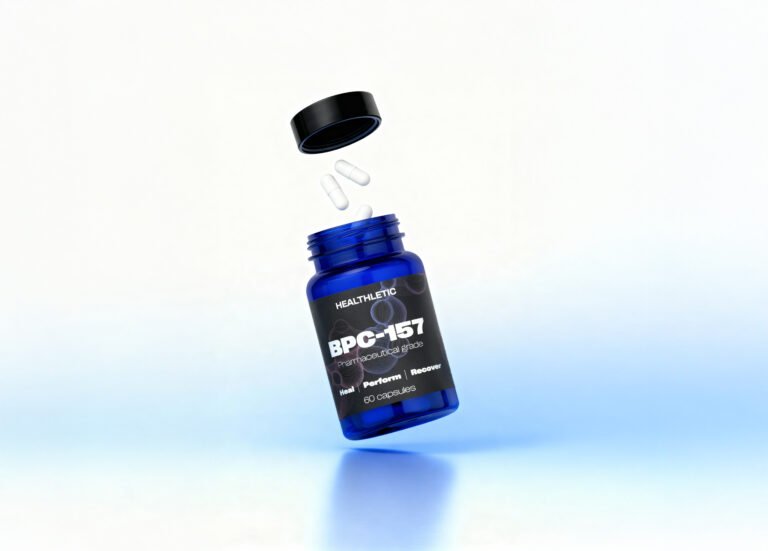
BPC-157: Promise Without Human Evidence
BPC-157 is the compound most associated with oral peptide use for the digestive tract, on the logic that gut-local exposure may be useful even where whole-body absorption is uncertain. It is a synthetic peptide derived from a protein found in the stomach, and it has generated significant interest for its potential to promote healing of muscles, tendons, ligaments, and the digestive tract.
However, the evidence remains preclinical. Animal studies have shown promising results for muscle healing and tissue repair, but a 2026 review in the American Journal of Sports Medicine emphasized that significant research on safety and efficacy is still required.
The data for oral BPC-157 specifically is even thinner. While some users report benefits, these are anecdotal. There is currently no published human clinical trial demonstrating that oral BPC-157 achieves therapeutic systemic levels.
What this means for you: the hype around BPC-157 often exceeds the evidence. If you are considering it, be aware that you are operating outside established clinical evidence. Treat oral BPC-157 as a research question, not a settled one.
GHK-Cu: Limited Oral Absorption
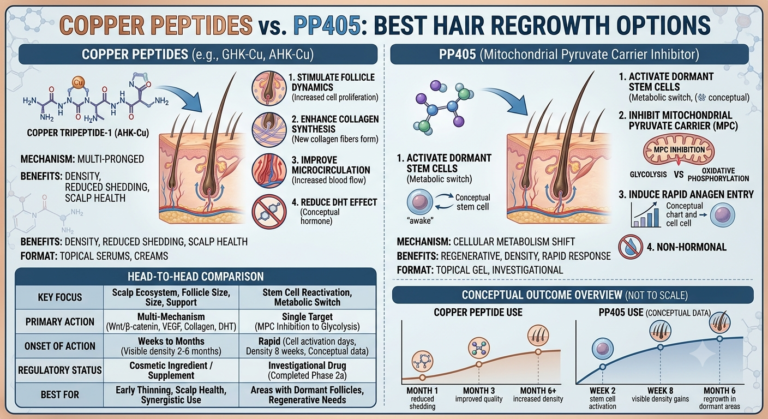
GHK-Cu is a copper-binding tripeptide studied for collagen synthesis, epithelial modeling, and cytokine signaling. It is most established topically and by injection; the intact tripeptide is poorly absorbed if simply swallowed, though capsule forms exist.
For skin-focused research, GHK-Cu is most effective through topical application or injection. Swallowed GHK-Cu is unlikely to deliver meaningful systemic levels.
What this means for you: if you are sourcing GHK-Cu for skin-focused research, the priority is a verified, third-party-tested vial with a batch COA. Do not expect an oral capsule to deliver the same results as topical or injectable forms.
Selank and Semax: Mucosal Routes Preferred
Selank and Semax are the classic examples where needle-free does not mean oral. Both are used mainly as nasal sprays or sublingual drops, because swallowing them wastes most of the dose to digestion.
Selank is studied for its calming and cognitive effects, while Semax is researched for focus and neuroprotection. Both have poor oral bioavailability but can be effective through nasal or sublingual administration.
What this means for you: if your goal is a non-injectable nootropic peptide, look to mucosal delivery rather than a swallowed liquid peptide. Nasal sprays and sublingual drops are more credible routes for these compounds.
MK-677 (Ibutamoren): Orally Active by Design
MK-677 (ibutamoren) is the go-to needle-free option for growth hormone support because it is orally active by design. Strictly speaking, it is a non-peptide secretagogue rather than a peptide, but it is almost always grouped with oral peptides because it delivers a peptide-adjacent effect in a swallowed capsule.
The evidence for MK-677 shows modest increases in growth hormone and IGF-1 levels, but it also carries metabolic side effects including fatigue, insomnia, and small increases in fasting glucose and insulin resistance.
What this means for you: MK-677 offers modest benefits with meaningful side effect risks. It is orally active, but the risk-reward profile requires careful consideration.
Growth Hormone-Releasing Peptides: Injectable Still Preferred
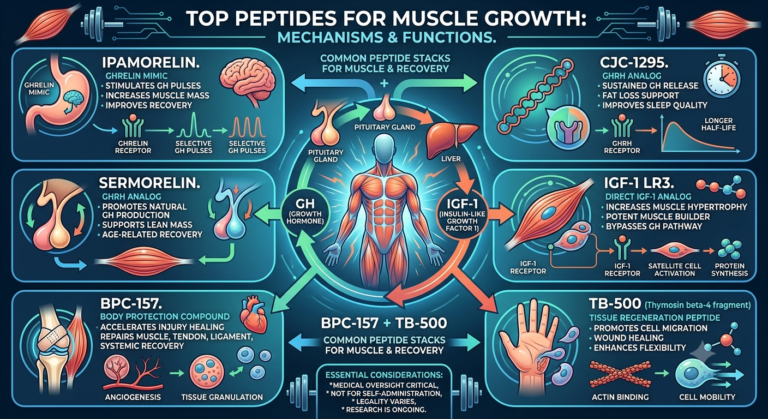
Growth hormone-releasing peptides (like GHRP-2, GHRP-6, and ipamorelin) are injectable compounds that stimulate the pituitary gland to release growth hormone. Some oral versions exist, but their bioavailability is questionable.
The injectable forms show modest benefits for muscle mass and fat loss, but carry metabolic side effects. Oral versions lack comparable clinical data. Most experts continue to recommend injectable GHRPs if this class of peptide is being considered.
What this means for you: growth hormone-releasing peptides offer modest benefits with meaningful side effect risks. Oral versions are not clinically validated.
How to Choose Oral and Liquid Research Peptides
Whether you are evaluating capsules, oral peptide drops, or an injectable benchmark, the sourcing checklist is the same. This is where most buyers of oral research peptides go wrong—they compare price and format instead of documentation.
A batch-specific certificate of analysis is essential. This should be tied to the exact lot, not a generic PDF, and should show identity, purity (ideally 99%+), and endotoxin/sterility results. Third-party testing from independent labs is preferable to just the vendor’s own word.
Be skeptical of products making unrealistic route claims. Any liquid peptide supplements promising injection-level results from a swallowed dose without absorption technology should be treated as marketing rather than evidence.
Storage and stability matter. Many peptides need cold storage; a ready-to-use liquid that ships warm with no guidance is a red flag. Reputable vendors clearly label products for laboratory research only and do not make treatment claims.
The 2026 Outlook: Where Is This Going?
The oral proteins and peptides market is projected to reach $8.80 billion in 2026, growing at a 13.29% CAGR to $18.66 billion by 2032. Major pharmaceutical companies are investing heavily in next-generation delivery technologies.
Nanoengineered delivery platforms represent a significant advance. The BACH01 platform uses mesoporous silica nanoparticles for oral semaglutide delivery, with preclinical studies showing significantly improved oral bioavailability. Long-acting oral peptides are another frontier. EB612, a first-in-class oral long-acting PTH(1-34) analog for hypoparathyroidism, showed detectable drug in plasma for more than three days after a single dose in animal studies.
Expanding indications are driving the market. Icotrokinra is now being investigated for psoriatic arthritis, ulcerative colitis, and Crohn’s disease. The regulatory landscape is also evolving. The FDA’s increasing willingness to approve oral peptides with robust clinical data suggests that more approvals are coming.
The Bottom Line
Oral peptides are finally moving from promise to reality. Icotrokinra proves that oral peptide receptor antagonism can work at therapeutic levels. Collagen peptides have robust clinical evidence for skin health. And pipelines like ASC36 and EB618 suggest that metabolic oral peptides are just a few years away.
But for now, your expectations should match the evidence. Oral collagen peptides work for skin and muscle (with exercise). Icotrokinra works for psoriasis. Metabolic oral peptides show promise but still lag behind injectable options. BPC-157 and GHK-Cu have limited oral evidence despite widespread marketing.
The needle is still the gold standard for systemic peptide delivery. But the gap is closing faster than anyone predicted. As the market grows and delivery technologies improve, more oral peptides will achieve clinical validation. 2026 is the year the dam broke. What follows will be a flood of innovation.
Frequently Asked Questions
Do oral peptides actually work?
Some do, most do not. A minority of peptides—around 4% of peptide medicines—are usable orally, and the reliable ones use absorption-enhancing technology such as the SNAC enhancer in oral semaglutide. Raw research peptides with no delivery engineering are largely degraded in the stomach and gut, so a swallowed dose usually underperforms an injection.
What is the difference between oral and needle-free peptides?
All oral peptides are needle-free, but not all needle-free peptides are oral. Needle-free is an umbrella term that also covers sublingual drops, buccal films, and nasal sprays—routes that bypass the digestive tract entirely and are often better suited to fragile peptides than swallowing.
Are sublingual peptides better than swallowed capsules?
Often, yes, for peptides that would otherwise be destroyed in the gut. Sublingual and buccal routes absorb through the mouth’s mucous membranes and skip stomach acid and digestive enzymes. Absorption still varies a lot by molecule and formulation, so it is not a guarantee.
Are liquid peptide drops the same as injectable peptides?
No. A liquid peptide drop is just a peptide in solution dosed by mouth. Unless it is designed for sublingual absorption or built with an enhancer, being liquid does not help it survive digestion. The delivery route and the molecule’s stability matter far more than whether it is a liquid or a powder.
Which peptides are naturally oral or needle-free?
Oral semaglutide is the clearest engineered example. MK-677 is orally active (though technically a non-peptide secretagogue). Selank and Semax are used needle-free but via nasal or sublingual routes rather than swallowing. BPC-157 is popular orally for gut-focused research, with limited human data.
How do I judge the quality of oral peptide supplements?
Require a batch-specific certificate of analysis with identity and purity data, third-party testing, honest route claims, and clear storage guidance. Treat any product promising injection-level results from a plain swallowed dose, with no absorption technology, as marketing rather than evidence.
Read also
How to Safely Source Peptides: Avoiding Scams and Poor Quality