Peptide Eye Serums: Do They Actually Reduce Dark Circles? (2026 Evidence Review)
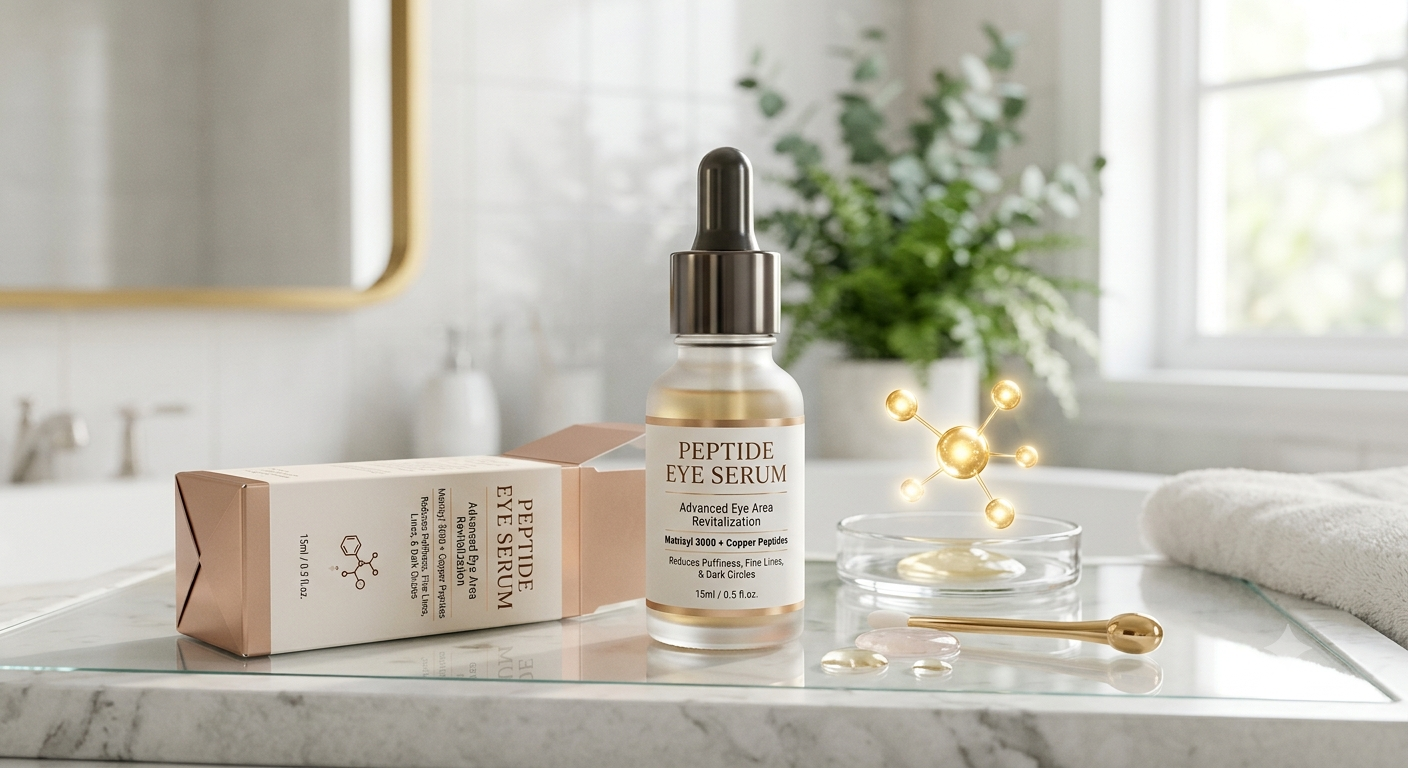
Peptide Eye Serums :The skin around your eyes is the thinnest on your entire body—up to ten times thinner than the skin on the rest of your face—making it especially vulnerable to signs of aging, fatigue, and environmental stress. This delicate tissue also has fewer oil glands, meaning it’s prone to dryness and irritation. It’s no wonder that peptide eye serums have exploded in popularity, promising to target everything from dark circles to crow’s feet.
But do they actually deliver? The short answer is yes—with realistic expectations. Peptides aren’t a magic eraser, and they won’t correct deep anatomical issues like significant volume loss from aging or pronounced tear trough hollows. However, they are scientifically proven to improve the appearance of dark circles, puffiness, and fine lines by working at a foundational level to improve skin quality.
What Are Peptides and How Do They Work?
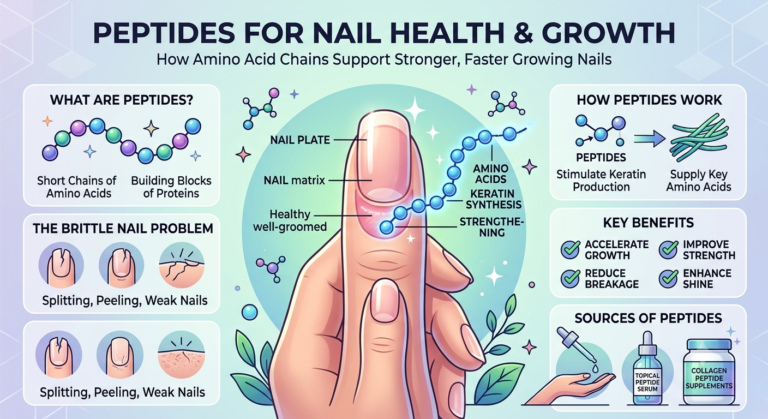
Peptides are short chains of amino acids—the building blocks of proteins—that act as signaling molecules in the skin. When applied topically, they effectively “tell” your skin to perform specific functions, primarily supporting the production of collagen and elastin. This is crucial because collagen loss leads to thinning skin, which can make the dark blood vessels underneath more visible—a common contributor to dark circles.
Beyond general collagen support, different peptides target specific concerns. Acetyl tetrapeptide-5 (marketed as Eyeseryl®), for example, is specifically designed to reduce under-eye bags by improving lymphatic drainage, reducing capillary permeability, and inhibiting ACE activity to prevent fluid accumulation in the periorbital tissue. Other types, like neurotransmitter-inhibiting peptides (e.g., acetyl hexapeptide-8), can relax expression lines around the eyes to soften crow’s feet.
What the Clinical Data Shows
Multiple clinical trials confirm the efficacy of targeted peptide formulations:
OS-01 EYE: A clinical trial involving 22 participants aged 47-65 demonstrated significant improvements across all measured categories. Skin hydration increased by 32.49% at 12 weeks, firmness improved by 10.19%, and elasticity by 25.58%. While no change in dark circles was observed at 4 weeks, 50% of patients saw statistically significant improvement by week 12 (p<0.001). Puffiness was reduced by a mean of 10.90% .
The Ordinary Multi-Peptide Eye Serum: Clinical testing showed a 28% reduction in the appearance of dark circles at 4 weeks, increasing to 53% at 8 weeks. Eye bags were reduced by 20% at 4 weeks and 50% at 8 weeks, with improvements in crow’s feet and under-eye wrinkles as well .
Eyeseryl® All-In Peptide: This innovative hexapeptide demonstrated up to 42.9% reduction in eye bag volume and 44.4% reduction in eye bag area after just 7 days of use .
Acetyl Tetrapeptide-5 (Eyeseryl®): Studies show it can help reduce visible eye bags by 17% after 28 days of consistent use . The peptide works through three key mechanisms: anti-glycation (preventing collagen damage), improving lymph drainage, and reducing capillary permeability .
TriHex Peptide Technology: A study on TriHex peptide-containing eye treatment showed significant improvements over 12 weeks: 41% reduction in lines/crow’s feet, 29% improvement in under-eye hollowing, 48% improvement in under-eye bags, and 39% improvement in dark circles .
Real-World Results and Timelines
The timeline for results varies by concern:
Puffiness and Dark Circles: Some improvements can be seen relatively quickly. The Eyeseryl® All-In peptide showed visible results in just 7 days , while The Ordinary’s Multi-Peptide Eye Serum demonstrated a 28% reduction in dark circles at 4 weeks and 53% at 8 weeks . The OS-01 peptide showed that dark circle improvements often require longer—12 weeks .
Fine Lines and Firmness: Boosting collagen takes longer. While you might see improved texture within weeks, dermatologists note it typically takes three to six months to notice a significant difference in firmness and fine line reduction.
What to Look For
To get the best results, prioritize multi-peptide blends that work in synergy to target various concerns. Look for :
- Signal peptides like palmitoyl tripeptide-38 for firmness and collagen support
- Carrier peptides like copper peptides for repair
- Specific peptides like acetyl tetrapeptide-5 for de-puffing and dark circles
- Supportive ingredients like niacinamide, hyaluronic acid, and antioxidants to boost and complement the peptide activity
The Bottom Line
Peptide eye serums are effective for reducing dark circles and puffiness, but they work best as a long-term strategy rather than a quick fix. They are particularly beneficial for early to moderate signs of aging and for those with sensitive skin who may not tolerate stronger actives like retinoids. For the best results, consistency is key—peptides should be part of a disciplined, holistic skincare routine that includes proper hydration, daily SPF, and potentially other brightening agents like vitamin C.
Read also
GLP-1 Peptides Went Mainstream — Here’s What Got Lost in Translation
Collagen Peptides: The One ‘Peptide Supplement’ With Real Evidence Behind It