Collagen Peptides: The One ‘Peptide Supplement’ With Real Evidence Behind It
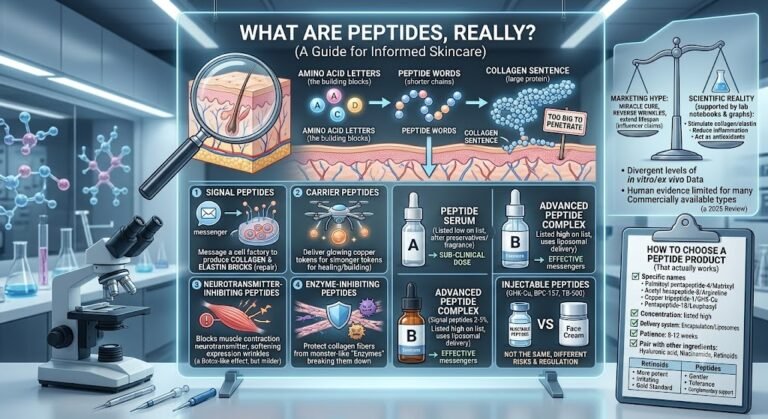
Collagen Peptides :In the world of wellness supplements, few categories are as cluttered with hype as peptide products. From injectable “research peptides” to expensive beauty elixirs, the market is flooded with promises that far outpace the science. But there is one type of peptide supplement that actually delivers on its claims: collagen peptides.
Unlike many peptide products that rely on animal studies or lab-dish experiments, collagen peptides are supported by a growing body of human clinical trials—covering everything from skin aging and joint function to muscle recovery, bone density, and even sports performance. Here’s what the evidence actually shows.
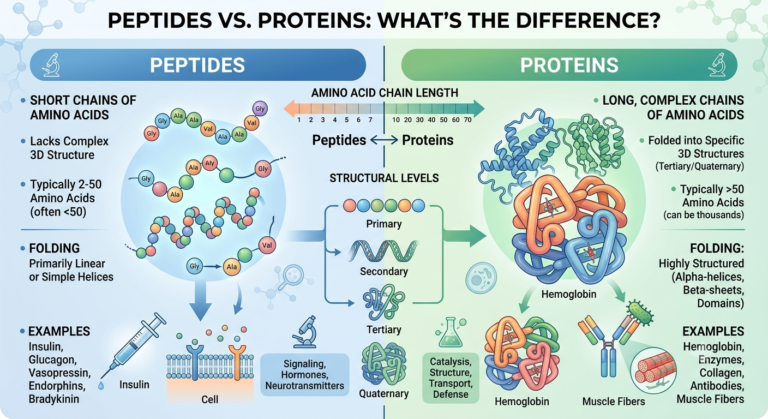
What Are Collagen Peptides?
Collagen is the most abundant protein in the human body, comprising approximately 30% of total protein mass . Its defining structural feature is a triple helix: three polypeptide chains wound together and stabilized by hydroxyproline-mediated hydrogen bonding . Type I collagen dominates skin, bone, tendon, and ligament, while Type II collagen is concentrated in cartilage .
Collagen peptides are produced by breaking down full-length collagen proteins through enzymatic hydrolysis, resulting in smaller, low-molecular-weight peptides typically ranging from 0.3 to 8 kDa . This breakdown process is crucial because intact collagen molecules are too large to be absorbed effectively. Once ingested, collagen peptides are absorbed through the intestinal barrier and enter the bloodstream, where they can influence tissues throughout the body .
What makes them unique is their distinctive amino acid composition—rich in glycine, proline, and hydroxyproline—which may serve as building blocks for the body’s own collagen production . Hydroxyproline is nearly unique to collagen and gelatin in the diet and is not ordinarily present in other dietary proteins .
The Evidence: What Clinical Trials Actually Show
Skin Health: The Strongest Case
The most robust evidence for collagen peptides comes from skin health research. A 2025 meta-analysis of 16 randomized controlled trials involving over 1,200 participants found that collagen peptide supplementation significantly improved :
- Skin elasticity (SMD = 0.32, P < 0.001)
- Skin hydration (SMD = 0.33, P < 0.05)
- Skin roughness (SMD = -0.71, P < 0.001)
Subgroup analysis revealed that collagen peptides are most effective in individuals under 48 years of age, though they still improved elasticity in older adults . Mechanistic studies suggest that collagen peptides target multiple aging pathways, reducing oxidative stress, inflammation, and apoptosis .
A 2026 updated meta-analysis of 35 randomized controlled trials comprising 2,534 participants further refined these findings . The analysis revealed that oral collagen supplementation yielded statistically significant improvements in:
- Skin hydration (SMD = 0.44; 95% CI: 0.15–0.73)
- Skin elasticity (SMD = 0.62; 95% CI: 0.15–1.10)
- Barrier function via reduced transepidermal water loss (SMD = −0.39; 95% CI: −0.62 to −0.16)
Efficacy appeared predominantly time-dependent rather than dose-dependent, with elasticity and barrier improvements requiring at least 12 weeks of supplementation . The study found that apparent improvements in skin wrinkles, roughness, and dermal density were statistical artifacts driven by high-leverage outliers and severe inter-study heterogeneity .
In simpler terms: collagen peptides are effective for hydration, elasticity, and barrier function, but the evidence for wrinkle reduction and dermal density is not yet robust enough to support definitive conclusions .
Musculoskeletal Health: A Growing Evidence Base
A 2024 systematic review and meta-analysis of 19 studies involving 768 participants found that long-term collagen peptide supplementation (≥8 weeks, 15g daily) combined with physical training produced significant improvements in :
- Fat-free mass (SMD 0.48, p < 0.01)
- Tendon morphology (SMD 0.67, p < 0.01)
- Muscle architecture (SMD 0.39, p < 0.01)
- Maximal strength (SMD 0.19, p < 0.01)
- 48-hour recovery from exercise-induced muscle damage (SMD 0.43, p = 0.045)
The evidence for body composition was rated as moderate certainty, while improvements in tendon morphology showed significant effect sizes despite lower overall certainty . The GRADE approach revealed moderate certainty of evidence for body composition, a very low certainty for tendon morphology and mechanical properties, and a low certainty for the remaining outcomes .
Bone Health: New Evidence Emerging
A 2025 meta-analysis on bone and muscle health found that collagen peptide supplementation, particularly when synergized with calcium and vitamin D, is associated with continuous improvements in :
- Bone mineral density (BMD) in the femoral neck and spine
- Bone turnover markers (SMD 0.40–0.58)
- Muscle function (SMD 0.60 [0.05, 1.15])
The study noted positive synergies when collagen was paired with vitamin D and calcium (SMDs 0.40–0.56) . However, there was significant variation in BMD results across trials (I² = 80.1%), indicating heterogeneity that warrants cautious interpretation .
Anti-Fatigue Effects: Preclinical Promise
Preclinical research in rodents suggests collagen peptides may have anti-fatigue effects. A 2025 study on salmon skin collagen peptide found that it significantly improved exercise endurance in mice, extending exhaustive swimming duration by 4–5 times compared to the control group . Mechanistic studies showed that the peptides activated the AMPK/PGC-1α/NRF1/TFAM pathway, promoting mitochondrial biogenesis, and the NRF2/HO-1 pathway, enhancing antioxidant enzyme activity .
Similar findings were reported with sheep skin collagen peptides, which increased swimming time by 55% compared to the control group . These effects were attributed to activation of the AMPK/PGC-1α axis (enhancing energy metabolism) and the NRF2/HO-1 axis (reducing oxidative damage) . While these results are promising, they are based on animal models and require human clinical trials for confirmation.
What Makes Collagen Peptides Different from Other Peptide Supplements
The key distinction lies in the quality of evidence:
| Peptide Type | Evidence Level | Human Data | Regulation |
|---|---|---|---|
| Collagen Peptides | Strong (multiple RCTs, meta-analyses) | Extensive | Regulated as food/supplement |
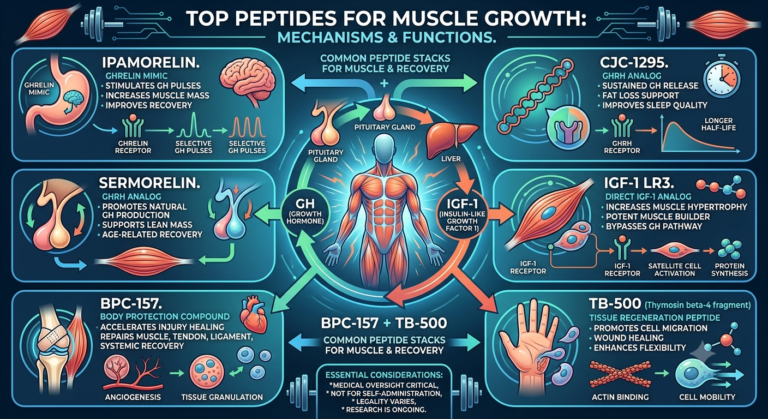
| BPC-157, TB-500 | Preclinical (animal studies only) | Minimal | WADA banned, unregulated |
| Growth Hormone Peptides | Investigational | Mixed | WADA banned |
Collagen peptides are classified as Generally Recognized as Safe (GRAS) by the FDA and are widely available as over-the-counter dietary supplements . They are not subject to FDA drug approval requirements .
Marine Collagen: A Sustainable and Bioavailable Source
Marine-derived collagen, sourced from fish processing by-products such as skin, bones, and scales, is increasingly favored over mammalian sources due to several advantages :
Higher Bioavailability: Marine collagen peptides often have a lower average molecular weight compared to terrestrial sources, which is linked to superior absorption and bioavailability—some reports suggest hydrolyzed fish collagen is absorbed up to 1.5 times more efficiently than bovine or porcine collagen .
Safety and Cultural Acceptance: Marine sources are free from concerns over zoonotic diseases like BSE (“mad cow disease”) and circumvent religious and cultural restrictions associated with bovine and porcine products .
Sustainability: Marine collagen production generally has a lower carbon and water footprint compared to mammalian collagen and supports fishery waste management, aligning with circular economy goals .
Practical Takeaways
For those considering collagen peptide supplementation, the evidence supports the following conclusions:
- Skin Health: Collagen peptides are effective for improving skin hydration, elasticity, and barrier function. The effects are time-dependent, requiring at least 12 weeks of consistent supplementation . The evidence for wrinkle reduction and dermal density is less robust .
- Muscle and Tendon Health: When combined with physical training, collagen peptides may support improvements in fat-free mass, tendon morphology, muscle architecture, maximal strength, and recovery .
- Bone Health: Collagen peptides may support bone mineral density and bone turnover markers, particularly when paired with calcium and vitamin D .
- Marine vs. Mammalian: Marine collagen may offer superior bioavailability, but both sources have demonstrated efficacy in clinical trials .
- Dosing: Most studies used 2.5–15g daily for at least 8–12 weeks. The evidence suggests that duration of use matters more than dose for skin outcomes .
The Bottom Line
Collagen peptides are the only peptide supplement with a substantial body of human clinical data supporting their use. For skin health, the evidence is strong—improvements in hydration, elasticity, and barrier function are consistently observed . For musculoskeletal health, the evidence is growing, with meta-analyses showing benefits for fat-free mass, tendon morphology, and recovery, though the certainty of evidence varies . For bone health, early meta-analyses suggest benefits for BMD and bone turnover markers, particularly when combined with calcium and vitamin D . Preclinical research on anti-fatigue effects is promising but requires human trials.
For those considering a peptide supplement, collagen is the only category where the claims are backed by real evidence—not just marketing hype.
Disclaimer: This article is for informational purposes only and does not constitute medical advice. Always consult a qualified healthcare professional before starting any new supplement regimen. Individual results may vary.