Epitalon vs SS-31: Two Approaches to Cellular Aging (2026)
Epitalon vs SS-31: Two Approaches to Cellular Aging (2026) :If you have been exploring peptide therapies for longevity and cellular health, two names consistently surface in research discussions: Epitalon and SS-31. Both are at the forefront of anti-aging research, yet they approach the challenge of cellular aging from fundamentally different angles.
One targets the very structure of our chromosomes, aiming to extend the cellular lifespan. The other focuses on the cellular power plants, seeking to restore energy production and efficiency.
This guide breaks down how they compare, what each one does, and the scientific rationale behind their mechanisms.
What Are They?
Epitalon: The Telomere and Pineal Peptide
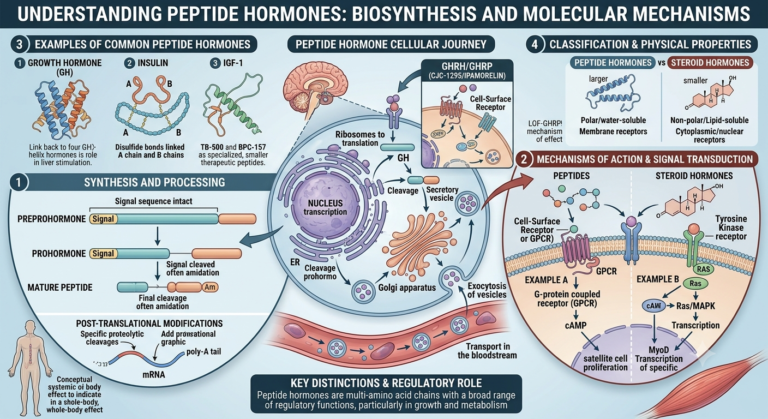
Epitalon is a synthetic tetrapeptide, composed of four amino acids: alanine, glutamic acid, aspartic acid, and glycine (Ala-Glu-Asp-Gly). It was developed by renowned Russian gerontologist Vladimir Khavinson and his associates and has been the subject of longevity research for decades, particularly in Eastern Europe.
SS-31 (Elamipretide): The Mitochondrial Peptide
SS-31, also known as elamipretide, is a mitochondria-targeted synthetic peptide. Unlike Epitalon, its primary focus is the mitochondria—the organelles responsible for producing over 90% of the energy required by our cells.
Mechanisms of Action: How They Work
How Epitalon Works
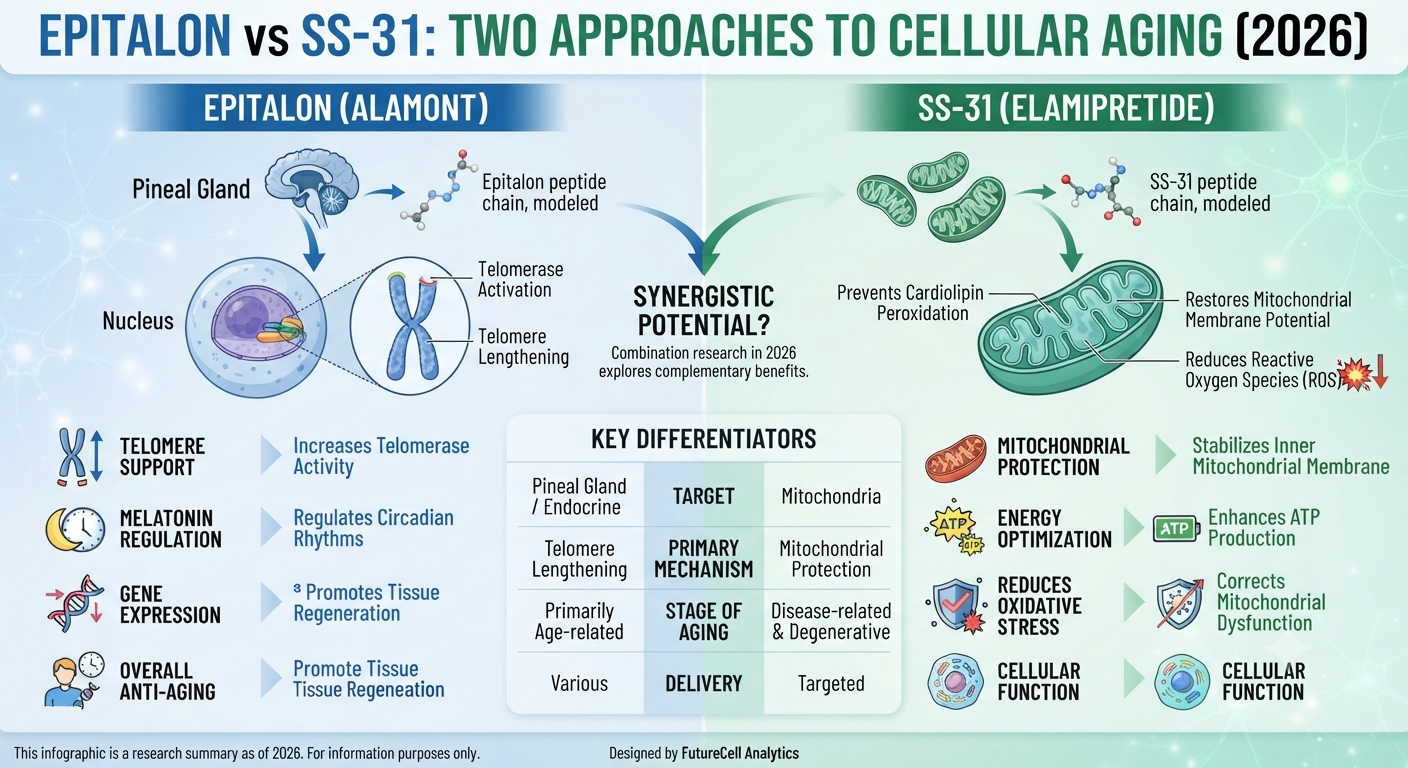
Epitalon is best known for its proposed ability to stimulate the production of telomerase. This enzyme repairs and extends the protective caps at the ends of our chromosomes, known as telomeres, which shorten with each cell division and are a hallmark of biological aging.
Epitalon also interacts with the pineal gland, influencing the regulation of melatonin and circadian rhythms, which are essential for overall health and aging.
How SS-31 Works
SS-31 is designed to specifically bind to cardiolipin, a critical lipid found in the inner membrane of mitochondria. By binding to cardiolipin, SS-31 helps preserve the structural integrity of the mitochondrial membrane, optimizing the efficiency of the electron transport chain and the production of ATP (cellular energy).
SS-31 also significantly reduces mitochondrial oxidative stress and helps prevent the dysfunction that leads to cellular damage and aging.
Epitalon vs SS-31: Side-by-Side Comparison
Clinical Applications and Research
Epitalon in Research
Research on Epitalon has primarily centered on its potential to regulate telomere length, which is directly linked to cellular aging and lifespan. It is one of the most cited peptides in the anti-aging field, though its use remains largely confined to experimental studies.
SS-31 in Research
SS-31 has been the subject of studies published in major journals, including Nature Scientific Reports and RSC Advances. Research suggests it has the potential to protect the heart, skeletal muscle, and neuronal cells from age-related damage and disease.
Are They Considered Safe?
Both peptides are classified as research chemicals and are not approved for human use in many jurisdictions. Their use is generally restricted to clinical trials and experimental settings.
- Epitalon: Long-term human studies are limited, and its safety profile for widespread use is not fully established.
- SS-31: While preclinical studies are promising, research is still ongoing to establish its efficacy and safety for humans.
Bottom Line
Epitalon and SS-31 are both compelling anti-aging peptides, but they serve different primary functions:
- Choose Epitalon if your focus is on systemic longevity and cellular lifespan, particularly through the potential extension of telomeres and regulation of circadian rhythms.
- Choose SS-31 if your focus is on cellular energy, mitochondrial health, and combating oxidative stress.
Disclaimer: This article is for informational purposes only and does not constitute medical advice. Peptides are research chemicals and are not approved for human consumption in many jurisdictions. Always consult a qualified healthcare professional before considering any peptide therapy.
write in 2000 little long
Read 12 web pages
Epitalon vs SS-31: Two Approaches to Cellular Aging (2026)
If you have been exploring peptide therapies for longevity and cellular health, you have likely encountered two names that appear prominently in research discussions: Epitalon and SS-31. Both are at the forefront of anti-aging research, yet they approach the challenge of cellular aging from fundamentally different angles.
One targets the very structure of our chromosomes, aiming to extend cellular lifespan. The other focuses on the cellular power plants, seeking to restore energy production and efficiency. Understanding this distinction is essential for anyone trying to decide which aligns with their health goals—or whether combining them makes sense.
Here is a clear breakdown of how they compare, what each one does, and the scientific rationale behind their mechanisms.
What Are They?
Epitalon: The Telomere and Pineal Peptide
Epitalon (also known as Epithalon) is a synthetic tetrapeptide composed of four amino acids: alanine, glutamic acid, aspartic acid, and glycine (Ala-Glu-Asp-Gly). It was developed by renowned Russian gerontologist Vladimir Khavinson and his associates at the St. Petersburg Institute of Bioregulation and Gerontology, following decades of research into the bovine pineal gland extract Epithalamin.
The story of Epitalon begins in the 1970s, when Khavinson and his team began investigating peptide extracts from various animal organs, hypothesizing that these substances could regulate the function of their source tissues. This research led to the isolation of a pineal gland polypeptide extract called Epithalamin, which showed significant promise in modulating immune function, enhancing antioxidant defense, and promoting longevity in animal studies. To overcome the challenges of standardizing and scaling a complex animal extract, researchers analyzed its amino acid composition and synthesized the tetrapeptide Ala-Glu-Asp-Gly, which they named Epitalon. This synthetic version was found to be the active component responsible for many of the biological effects observed with Epithalamin, and subsequent research has largely focused on this standardized compound.
SS-31 (Elamipretide): The Mitochondrial Peptide
SS-31, also known as Elamipretide, is a mitochondria-targeted synthetic peptide with the sequence D-Arg-Dmt-Lys-Phe-NH2. It is also referred to as Bendavia and is a first-in-class, water-soluble, aromatic-cationic tetrapeptide.
Unlike Epitalon, whose effects are primarily systemic and related to the pineal gland and telomeres, SS-31’s primary focus is the mitochondria—the organelles responsible for producing over 90% of the energy required by our cells. It was developed to specifically bind to cardiolipin, a unique phospholipid almost exclusively found in the inner mitochondrial membrane, making it a highly targeted therapeutic agent for mitochondrial dysfunction.
Mechanisms of Action: How They Work
How Epitalon Works
Epitalon’s bioactivity is not confined to a single receptor or pathway but rather involves a coordinated influence on several fundamental processes linked to cellular aging and homeostasis.
Telomerase Activation and Telomere Maintenance: This is the most significant and widely cited mechanism of Epitalon. Telomeres are protective caps at the ends of chromosomes that shorten with each cell division—a hallmark of cellular aging known as the Hayflick limit. Epitalon induces the expression of the telomerase catalytic subunit (hTERT) and its enzymatic activity in human somatic cells. Mechanistically, the peptide can penetrate the nucleus, bind to specific promoter regions of the telomerase gene, and influence chromatin structure, making the gene more accessible for transcription. This reactivation of telomerase leads to the elongation of telomeres, thereby extending the proliferative potential of cells. In human fetal fibroblast cultures, Epitalon treatment was sufficient to overcome the Hayflick limit, extending proliferation from the 34th passage in control cells to beyond the 44th passage.
Regulation of Melatonin Synthesis: Epitalon plays a key role in normalizing the function of the pineal gland, particularly in the context of aging. It stimulates the synthesis of melatonin by upregulating key components of the signaling pathway, including the transcription factor pCREB (phosphorylated cAMP response element-binding protein) and the enzyme AANAT (arylalkylamine N-acetyltransferase), which is the rate-limiting step in melatonin production.
Epigenetic Regulation via Histone Interaction: Molecular modeling studies have shown that the AEDG peptide preferentially binds to specific sites on linker histones H1/3 and H1/6. These histones play a role in chromatin compaction. By interacting with them, Epitalon is thought to decondense chromatin, making certain gene promoter regions more accessible for transcription.
Antioxidant and Immune-Modulatory Effects: Animal and limited human data suggest Epitalon may influence antioxidant enzyme activity (such as superoxide dismutase), reducing oxidative stress—a contributor to aging processes. There is also some early evidence for beneficial immune system modulation in the elderly.
How SS-31 Works
SS-31 acts through a highly specific, direct interaction with cardiolipin, a phospholipid essential for maintaining the intricate folded structure of the inner mitochondrial membrane (cristae) and for organizing the electron transport chain (ETC) components into efficient supercomplexes.
The SS-31-Cardiolipin Interaction: The binding is governed by a combination of electrostatic and hydrophobic forces. At physiological pH, SS-31 carries a net positive charge (+3), which drives its accumulation in the mitochondria, drawn by the organelle’s highly negative membrane potential. This charge facilitates a strong electrostatic attraction to the highly anionic surface of the inner mitochondrial membrane, which is rich in cardiolipin. The aromatic residues—2′,6′-dimethyltyrosine (Dmt) and Phenylalanine—penetrate the hydrophobic acyl chain region of the lipid bilayer, allowing the peptide to engage simultaneously with both the polar head groups and the nonpolar acyl chains of cardiolipin.
Mitochondrial Stabilization: By binding to cardiolipin, SS-31 protects it from oxidative damage and preserves the integrity of the mitochondrial cristae. This interaction promotes the negative curvature of the membrane necessary for proper cristae formation, ensures the proper assembly and function of ETC supercomplexes, and facilitates more efficient electron transfer.
Enhanced Bioenergetics and Reduced Oxidative Stress: The stabilization of cardiolipin leads to several positive downstream effects:
- Improved ATP production: In aged mice, an 8-week treatment with Elamipretide reversed the age-related decline in maximum mitochondrial ATP production.
- Reduction of mitochondrial reactive oxygen species (ROS): The dimethyltyrosine residue within the SS-31 sequence is a potent antioxidant that directly scavenges ROS at their source within the ETC. By improving ETC efficiency and directly scavenging free radicals, SS-31 significantly reduces mitochondrial ROS production.
- Inhibition of mitochondrial permeability transition pore (mPTP) opening: This prevents the release of pro-apoptotic factors and protects against cell death.
Epitalon vs SS-31: Side-by-Side Comparison
| Feature | Epitalon | SS-31 (Elamipretide) |
|---|---|---|
| Type | Tetrapeptide | Tetrapeptide |
| Amino Acid Sequence | Ala-Glu-Asp-Gly (AEDG) | D-Arg-Dmt-Lys-Phe-NH2 |
| Primary Target | Telomeres, Pineal Gland | Mitochondria (specifically cardiolipin) |
| Key Mechanism | Activates telomerase (hTERT), influences melatonin and circadian rhythm | Binds cardiolipin, protects mitochondrial cristae, reduces oxidative stress |
| Associated Functions | Cellular longevity, telomere maintenance, circadian rhythm regulation, immune modulation | ATP production, mitochondrial bioenergetics, oxidative stress reduction, apoptosis inhibition |
| Application Focus | Systemic anti-aging, longevity, geroprotection | Mitochondrial dysfunction, age-related diseases, muscle wasting, cardiac function |
Clinical Applications and Research
Epitalon in Research
Epitalon has been the subject of research spanning over 25 years, with studies conducted using in vitro, in vivo, and in silico methods. The results indicate significant geroprotective and neuroendocrine effects, resulting from its antioxidant, neuro-protective, and antimutagenic properties.
Reported Human Benefits: Research reports a range of potential benefits in human studies, including reduced telomere shortening (with some elongation observed), improved immune function markers with fewer infections, lower all-cause mortality in a long-term open-label study, and better sleep quality.
A Key Researcher’s Work: The extensive research on Epitalon has been primarily led by Professor Vladimir Khavinson, whose work has explored its potential to regulate telomere length and influence the biology of aging.
SS-31 in Research
SS-31 has been the subject of studies published in major journals, including Nature Scientific Reports and RSC Advances. Research suggests it has the potential to protect the heart, skeletal muscle, and neuronal cells from age-related damage and disease.
Reversing Cardiac Aging: A significant study found that an 8-week treatment with SS-31 in aged mice reversed pre-existing age-related cardiac dysfunction. The treatment normalized the age-related increase in mitochondrial proton leak, reduced ROS production in cardiomyocytes, and improved diastolic function.
Preventing Muscle Atrophy: SS-31 has shown protective effects against muscle loss. In a rat model of hind-limb immobilization (simulating prolonged bed rest), SS-31 prevented the uncoupling of mitochondria and inhibited skeletal muscle atrophy by both inhibiting cell death pathways and increasing anabolic signaling pathways.
Cognitive Function: Studies suggest SS-31 may improve memory and synaptic function by enhancing synaptic integrity and reducing neuroinflammation, making it a potential treatment for neurodegenerative diseases.
Potential Benefits
Epitalon’s Reported Benefits
Research and clinical experience associate Epitalon with several potential benefits:
- Telomere maintenance and extension – May slow cellular aging and extend cellular lifespan
- Improved circadian rhythm and sleep – Regulates melatonin production
- Enhanced immune function – Modulates immune responses in the elderly
- Reduced oxidative stress – Influences antioxidant enzyme activity
- Cellular rejuvenation – Potential to reduce the accumulation of senescent cells
- Longevity support – Associated with a lower mortality rate in a long-term study
SS-31’s Reported Benefits
Research and clinical experience associate SS-31 with several potential benefits:
- Enhanced mitochondrial function – Improves bioenergetics and ATP production
- Cardiovascular health – Reverses cardiac dysfunction and improves diastolic function
- Muscle protection – Prevents muscle atrophy and improves muscle endurance
- Reduced oxidative stress – Decreases ROS production and stabilizes mitochondrial membranes
- Cognitive function – Improves memory and synaptic function
- Ocular health – Enhances low-luminance vision in age-related macular degeneration
- Improved energy levels – Reduces fatigue and enhances endurance
Safety and Regulatory Considerations
Epitalon
Epitalon is a research compound and is not FDA-approved for human use in the United States. Its use is generally restricted to clinical trials and experimental settings. Long-term human studies are limited, and its safety profile for widespread use is not fully established.
SS-31 (Elamipretide)
SS-31 is also a research compound and is not FDA-approved for human use. However, it has been the subject of extensive preclinical and clinical studies for conditions like age-related macular degeneration, heart failure, chronic kidney disease, and chemotherapy-induced muscle wasting.
Contraindications: Safety during pregnancy or breastfeeding is not established; therefore, it is not recommended for these populations. It should be used cautiously in patients with active cancer unless prescribed by a healthcare provider.
Can You Use Them Together?
Research suggests the two peptides are potentially complementary. Epitalon works systemically by influencing telomeres, the pineal gland, and epigenetic regulation to support cellular longevity, while SS-31 targets the mitochondria to restore energy production and reduce oxidative stress.
Some researchers and users approach them as complementary compounds, using SS-31 to first support mitochondrial function before introducing other peptides.
Example applications:
- Comprehensive longevity support: Combining Epitalon’s systemic anti-aging effects with SS-31’s mitochondrial benefits may offer a multi-faceted approach to cellular health.
- Age-related decline: An individual experiencing both cognitive and energy-related issues might benefit from a combined protocol.
Bottom Line
Epitalon and SS-31 are both compelling peptides in the field of anti-aging research, but they serve different primary functions:
- Choose Epitalon if your focus is on systemic longevity and cellular lifespan, particularly through the potential extension of telomeres, regulation of circadian rhythms, and modulation of immune function.
- Choose SS-31 if your focus is on cellular energy, mitochondrial health, combating oxidative stress, and protecting tissues like the heart, skeletal muscle, and brain from age-related dysfunction.
- Consider combining them if you are interested in a comprehensive approach to cellular health that addresses both mitochondrial energy production and cellular lifespan regulation.
Disclaimer: This article is for informational purposes only and does not constitute medical advice. Peptides are research chemicals and are not approved for human consumption in many jurisdictions. Always consult a qualified healthcare professional before considering any peptide therapy.