Peptide Hormones: Insulin, Glucagon, and Oxytocin and Their Roles
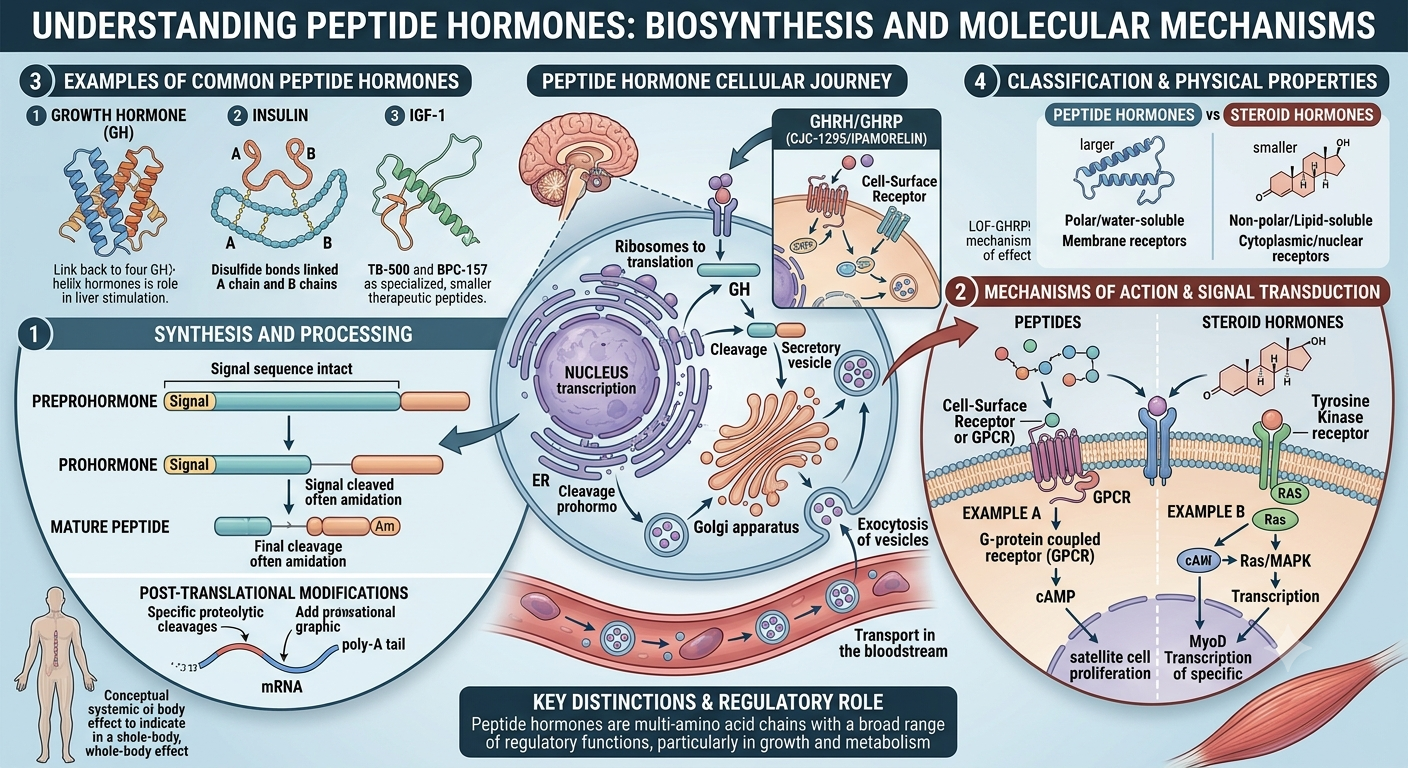
Peptide Hormones:Peptide hormones are signaling molecules made from chains of amino acids that regulate everything from blood sugar and metabolism to childbirth and bonding . Unlike steroid hormones, which are fat-soluble and can cross cell membranes, peptide hormones bind to receptors on the outside of cells, triggering cascades of internal signals. This mechanism makes them fast-acting and precise, but also means they cannot be taken orally—they would be digested before they could work .
Here’s what three of the most important peptide hormones actually do.
Insulin: The Storage Hormone
Insulin is the body’s primary blood sugar-lowering hormone. It is produced by the beta cells of the pancreas. Its primary job is to move glucose out of the bloodstream and into cells—particularly muscle, liver, and fat tissue—where it can be used for energy or stored for later .
How It Works
When you eat, blood sugar rises, and the pancreas releases insulin. Insulin acts like a key, unlocking cells so they can absorb glucose. It also signals the liver to store excess glucose as glycogen, a form of stored energy. Without insulin, glucose builds up in the blood, leading to high blood sugar. This is the central problem in diabetes .
Too Much or Too Little
- Too little insulin: Causes diabetes mellitus. Blood sugar stays high because cells can’t absorb it .
- Too much insulin: Causes hypoglycemia (low blood sugar). This can happen if someone with diabetes takes too much insulin or doesn’t eat enough .
Clinical Context
Insulin is a life-saving drug for people with type 1 diabetes and is also used to manage type 2 diabetes. It is normally given by injection because, like other peptide hormones, it would be destroyed in the digestive tract .
Glucagon: The Mobilization Hormone
Glucagon is insulin’s counterweight. Also made in the pancreas—but by alpha cells instead of beta cells—glucagon raises blood sugar when it drops too low . It is the body’s primary defense against hypoglycemia .
How It Works
When blood sugar is low—for example, between meals or during fasting—glucagon signals the liver to break down stored glycogen into glucose and release it into the bloodstream . This keeps your brain and body fueled, even when you haven’t eaten in a while.
Too Much or Too Little
- Too little glucagon: Can cause hypoglycemia (low blood sugar), because the body can’t mobilize glucose from storage .
- Too much glucagon: Can contribute to hyperglycemia (high blood sugar), which is why hyperglucagonemia plays a role in the pathology of diabetes .
Clinical Context
Glucagon is used as an emergency treatment for severe hypoglycemia. It is available as an injection or a nasal spray, and works rapidly to raise blood sugar in someone who is unconscious or unable to eat .
Oxytocin: The Social Hormone
Oxytocin is best known for its role in childbirth and bonding, but it also has metabolic effects that are less well-known. It is produced in the hypothalamus and released by the posterior pituitary gland .
How It Works
Oxytocin has two major actions in the body: it stimulates uterine contractions during labor and triggers milk ejection during breastfeeding . Beyond that, it also plays a role in social bonding, trust, and even stress reduction.
The Metabolic Connection
There is emerging evidence that oxytocin influences metabolism. Animal and human studies suggest that oxytocin can increase insulin and glucagon secretion, with effects on blood glucose regulation . Some studies suggest that oxytocin can raise plasma glucose and glucagon levels, while also increasing insulin . This is particularly interesting because oxytocin is sometimes given during childbirth, where it could theoretically affect blood sugar in both mother and baby .
Too Much or Too Little
- Too little oxytocin: In nursing mothers, a lack of oxytocin can prevent the milk-ejection reflex and make breastfeeding difficult .
- High levels: Have been linked to benign prostatic hyperplasia, a condition affecting the prostate in men over 50 .
Summary Comparison
| Hormone | Produced By | Primary Role | Deficiency Effect | Excess Effect |
|---|---|---|---|---|
| Insulin | Pancreas (β cells) | Lowers blood sugar; promotes glucose storage | Diabetes (high blood sugar) | Hypoglycemia (low blood sugar) |
| Glucagon | Pancreas (α cells) | Raises blood sugar; mobilizes glucose from liver | Hypoglycemia | Hyperglycemia (high blood sugar) |
| Oxytocin | Hypothalamus (released by pituitary) | Uterine contractions, milk ejection, bonding, and metabolic effects | Breastfeeding difficulties (in nursing mothers) | Potential links to benign prostatic hyperplasia |
The Big Picture
These three peptide hormones—insulin, glucagon, and oxytocin—illustrate the diversity of peptide hormone function. Insulin and glucagon work in opposition to maintain stable blood glucose, while oxytocin controls fundamentally different processes like childbirth and bonding, with emerging roles in metabolism. All three are made from amino acids, act by binding to cell-surface receptors, and must be administered by injection or nasal spray when used therapeutically because they would be broken down in the digestive tract .