Peptides for Bodybuilding: The Complete Research-Based Guide (2026)
Peptides for Bodybuilding :Peptides have become one of the most talked-about tools in the bodybuilding community, positioned as a more targeted alternative to traditional anabolic steroids. From recovery stacks to growth hormone secretagogues, these short amino-acid chains are increasingly used by athletes and gym-goers seeking to push past natural limits.
This guide examines what peptides are, how they work for bodybuilding, the key compounds being used, and most importantly—what the evidence actually supports versus what remains hype.
What Are Peptides and Why Are Bodybuilders Using Them?
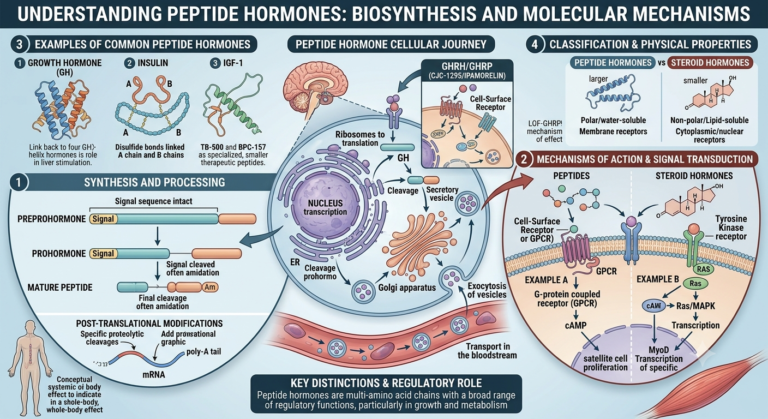
Peptides are short chains of amino acids—smaller than proteins—that act as signaling molecules within the body . They influence hormone production, tissue repair, immune function, and metabolism . In bodybuilding, the appeal comes down to their specificity: peptides can target particular physiological pathways, such as stimulating growth hormone release, promoting tissue repair in specific areas, or enhancing fat oxidation .
The pharmacological profiles of peptides, including enhanced stability and receptor selectivity, have made them attractive in both medical research and bodybuilding communities . Unlike broad-spectrum hormones, peptides work with the body’s existing systems rather than overriding them.
However, it’s important to be clear-eyed about what the science actually shows. A critical review published in the Journal of Sports Medicine and Physical Fitness (2026) notes that despite growing popularity, “the clinical evidence supporting peptide use in sport is limited” . Most published studies examine therapeutic applications under controlled dosing regimens, not the supraphysiological or combined protocols common in bodybuilding .
Growth Hormone Secretagogues: The Foundation
For most bodybuilders exploring peptides, growth hormone secretagogues (GHS) are the starting point. These compounds stimulate the pituitary gland to produce and release growth hormone naturally, amplifying the body’s own GH pulsatile pattern.
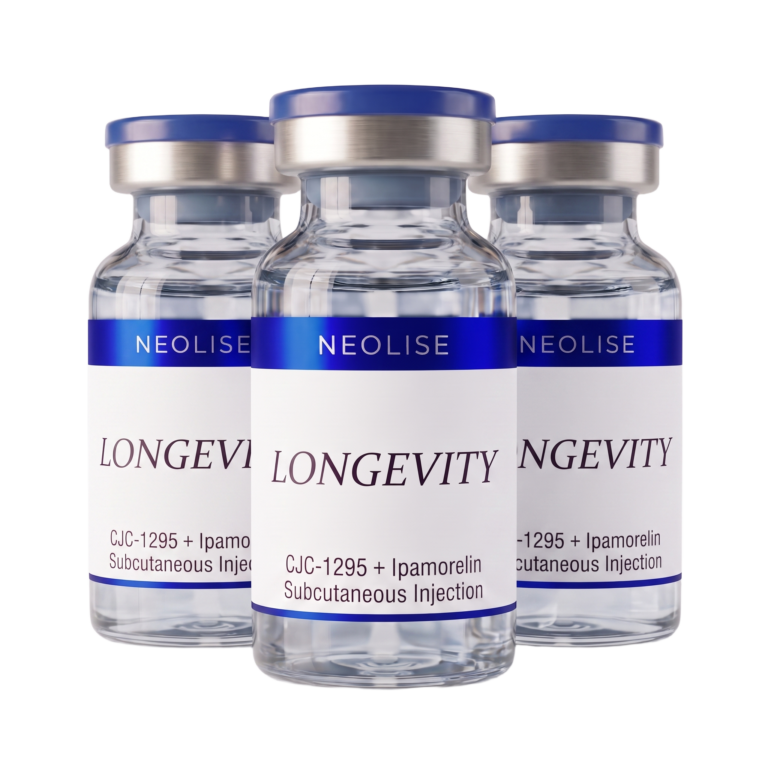
CJC-1295
CJC-1295 is a synthetic analog of growth hormone-releasing hormone (GHRH) . It works by binding to GHRH receptors on the pituitary, signaling the gland to produce more GH. The compound comes in two forms:
- CJC-1295 with DAC: Extended half-life of approximately 6-8 days, creating sustained GH elevation
- CJC-1295 without DAC (Mod GRF 1-29) : Short half-life of about 30 minutes, producing sharp GH pulses that mimic natural secretion patterns
Research shows CJC-1295 can increase GH levels by 2-10x above baseline, with corresponding increases in IGF-1 . For bodybuilders, this translates to potential improvements in muscle protein synthesis, recovery capacity, fat metabolism, and sleep quality.
Ipamorelin
Ipamorelin is a selective growth hormone secretagogue that works through the ghrelin/GHS receptor pathway—a different mechanism from CJC-1295 . What makes Ipamorelin particularly appealing is its selectivity. Unlike GHRP-2 and GHRP-6, which can increase cortisol, prolactin, and appetite, Ipamorelin causes minimal elevation of these hormones . This makes it a cleaner option for pure GH release.
Pro Tip: The CJC-1295 + Ipamorelin combination is widely considered the gold standard GH peptide stack because they work through complementary pathways—CJC-1295 amplifies the signal while Ipamorelin optimizes the timing.
GHRP-2 and GHRP-6
GHRP-2 and GHRP-6 are older growth hormone-releasing peptides that also work through the ghrelin receptor. They are potent GH releasers—often more so than Ipamorelin—but come with additional effects :
- GHRP-6: Known for dramatically increasing appetite (beneficial during bulking, problematic during cutting)
- GHRP-2: More selective than GHRP-6 but still elevates cortisol and prolactin more than Ipamorelin
MK-677 (Ibutamoren)
MK-677 deserves special mention because it’s orally bioavailable—no injections required. It’s technically a non-peptide ghrelin mimetic, but it’s universally discussed alongside peptides in bodybuilding contexts .
Compared to injectable GH peptides, MK-677 offers 24-hour GH elevation with a single daily oral dose. The tradeoff is less precise GH pulsing, significant appetite stimulation, and potential effects on insulin sensitivity with long-term use.
Recovery Peptides: The Wolverine Stack
The “Wolverine Stack”—combining BPC-157 and TB-500—has become one of the most popular recovery protocols in bodybuilding . The name evokes rapid healing and regeneration, and the pairing is based on complementary mechanisms.
BPC-157 (Body Protection Compound-157)
BPC-157 is a 15-amino acid peptide derived from a protein found in the stomach . It has demonstrated healing effects across tendons, ligaments, muscles, gut lining, and even neural tissue in animal studies .
For bodybuilders, BPC-157’s appeal lies in its effects on connective tissue repair. Heavy lifting creates significant stress on tendons and ligaments, and these injuries are among the most common in the sport. Research shows BPC-157 promotes angiogenesis (new blood vessel formation), improves collagen organization, and modulates inflammatory responses .
The Evidence Reality Check: As of early 2026, there are only three published human studies on BPC-157—all small pilot studies, none randomized controlled trials . A joint white paper from ECRI and the Institute for Safe Medication Practices found that 35 of 36 published studies on BPC-157 were conducted in animals, with no published Phase 1 human safety data .
TB-500 (Thymosin Beta-4 Fragment)
TB-500 is a synthetic version of a naturally occurring peptide involved in tissue repair throughout the body . Its primary mechanism involves regulating actin—a protein fundamental to cell structure and movement. By promoting cell migration and differentiation, TB-500 accelerates the healing cascade .
Mechanism: TB-500 is thought to bind to actin, helping cells migrate to injury sites, modulate inflammation, promote angiogenesis, and encourage collagen deposition .
The Evidence Reality Check: Similar to BPC-157, there is currently no clinical evidence in humans that TB-500 repairs muscles or increases athletic performance. The benefits are mainly hearsay and online anecdotes .
Why Use Them Together?
The combination is based on complementary mechanisms:
- BPC-157: More localized, targeted healing via growth factor modulation
- TB-500: More systemic support via actin regulation and cell migration
Many bodybuilders use this stack as a “maintenance protocol” during heavy training phases to keep connective tissue health ahead of the damage curve .
Fat-Loss Peptides
Getting lean is half the bodybuilding equation, and several peptides target fat metabolism specifically.
AOD-9604 and HGH Fragment 176-191
These peptides derive from the same region of the growth hormone molecule and aim to isolate GH’s lipolytic (fat-burning) properties . Research demonstrates their ability to increase fat oxidation and reduce body fat in animal models, with minimal effects on blood glucose or growth parameters .
MOTS-c
MOTS-c is a mitochondria-derived peptide that has generated interest for its metabolic effects. It activates AMPK (the cellular energy sensor), enhances glucose uptake, improves insulin sensitivity, and promotes fatty acid oxidation . For bodybuilders, MOTS-c is particularly interesting during cutting phases because it may help maintain metabolic rate and insulin sensitivity—two things that typically deteriorate during prolonged caloric restriction.
Note: GLP-1 receptor agonists like semaglutide produce dramatic fat loss, but their appetite-suppressive effects make them poorly suited for bodybuilders who need to maintain high protein intake and training performance.
The Evidence Gap: What’s Actually Proven?
A critical review in the Journal of Sports Medicine and Physical Fitness (2026) concluded that “peptides represent a new phase in performance enhancement but remain experimental substances with poorly defined long-term risks” .
Key findings from this review:
- Most published studies examine therapeutic applications, not the supraphysiological protocols common in bodybuilding
- Emerging data highlight potential risks: cardiovascular strain, insulin resistance, dyslipidemia, and psychiatric instability
- The largely unregulated supply chain exacerbates these dangers, as products are often mislabeled or contaminated
A 2026 white paper from ECRI and the Institute for Safe Medication Practices (ISMP) warns that the commercial market for these compounds has grown far faster than the science. Testing of peptide products sold on the gray market has found purity ranging from 5% to 75%, with arsenic and lead contamination exceeding established toxicity thresholds for injectable drugs . Documented clinical safety signals include a halted clinical trial following a fatal cardiac event, case reports of melanoma and kidney dysfunction, and a documented death following intravenous administration .
Safety Considerations and Side Effects
No honest discussion of peptides for bodybuilding is complete without addressing safety. While peptides generally show favorable safety profiles in preclinical research, the reality is that most bodybuilding applications involve compounds that haven’t completed rigorous human clinical trials .
Common Side Effects
| Side Effect | Associated Peptides | Severity | Management |
|---|---|---|---|
| Water retention | GH secretagogues, MK-677 | Mild-Moderate | Manage sodium intake |
| Injection site reactions | All injectable peptides | Mild | Rotate injection sites |
| Appetite increase | GHRP-6, MK-677 | Moderate | Use Ipamorelin during cutting |
| Blood glucose changes | MK-677, IGF-1 LR3 | Moderate | Monitor fasting glucose |
The Angiogenesis Question
Both BPC-157 and TB-500 promote angiogenesis—the formation of new blood vessels. This is the mechanism that helps heal tendons, but in theory, it could also feed an existing tumor . While there is no evidence that these peptides cause cancer, this is a genuine theoretical concern, especially relevant in older individuals where undiagnosed masses are more common.
Quality and Purity Concerns
The peptide market is largely unregulated, and quality varies dramatically between suppliers . Impure or mislabeled products can contain bacterial endotoxins, heavy metals, or incorrect compounds entirely. Always look for :
- Third-party HPLC and mass spectrometry testing with published results
- Purity of ≥98% verified by independent analysis
- Proper lyophilization and sterile packaging
- Transparent sourcing
The Legal Picture in 2026
The regulatory landscape for peptides has been evolving rapidly. Key developments include:
- BPC-157 and TB-500 are on WADA’s prohibited list under category S0 (non-approved substances), banned at all times in and out of competition . A first violation carries a default four-year ban .
- In April 2026, a federal policy change altered the regulatory classification of 12 peptides—a move ECRI and ISMP cautioned was not accompanied by new clinical evidence and should not be interpreted as a safety endorsement .
- In July 2026, the FDA’s Pharmacy Compounding Advisory Committee voted narrowly in favor of allowing compounding pharmacies to prepare BPC-157, KPV, TB-500, and MOTS-c. However, those recommendations are non-binding .
FDA career scientists had previously recommended against easing restrictions, determining there was insufficient evidence on the peptides’ effectiveness and safety . The advisory committee considering these peptides included members with ties to peptide clinics and businesses, which raised concerns among outside experts .
Practical Considerations for Bodybuilders
Administration
GH peptides should ideally be administered:
- On an empty stomach (at least 2 hours after eating)
- Before bed (amplifying the natural nocturnal GH surge)
- Upon waking (fasted state provides optimal conditions)
Recovery peptides like BPC-157 and TB-500 are less sensitive to food timing.
Cycling
Cycling peptides is generally recommended to prevent receptor desensitization:
- GH secretagogues: 8-12 weeks on, 4 weeks off
- BPC-157/TB-500: Typically run for injury duration (4-12 weeks)
- MK-677: Can be used longer-term, but periodic breaks are advisable
Starting Simple
If you’re new to peptides, begin with a single GH secretagogue stack—CJC-1295 (no DAC) + Ipamorelin—and run it for 8-12 weeks to evaluate your response before adding complexity.
The Bottom Line
Peptides offer bodybuilders a more targeted set of tools for optimizing growth hormone, accelerating recovery, and improving body composition. The GH secretagogues (particularly CJC-1295 + Ipamorelin) have the strongest research backing. Recovery peptides like BPC-157 and TB-500 address the connective tissue demands that heavy training creates.
But let’s be clear-eyed: peptides are not replacements for the fundamentals. No compound can substitute for progressive overload, adequate protein, sufficient sleep, and years of consistent effort. They are tools—potentially useful ones—that work at the margins of an already-solid program.
And crucially, the evidence is not where the marketing is. As the 2026 critical review concluded, “Until longitudinal data clarify their safety and prevalence, peptide use in both competitive and recreational settings should be considered high-risk and ethically problematic” .
If you do choose to explore peptides, start simple, prioritize quality and safety, monitor your health with regular bloodwork, and give each compound enough time to evaluate properly before adding complexity. And remember: the bodybuilders who get the most from peptides are the ones who approach them with the same discipline and patience they bring to their training.
Frequently Asked Questions
What is the best peptide for bodybuilding overall?
There’s no single “best” peptide—it depends on your goal. For overall body composition improvement, the CJC-1295 + Ipamorelin combination is the most widely recommended starting point due to its favorable research profile, tolerability, and synergistic GH release.
Do peptides actually work for building muscle?
GH secretagogues have demonstrated increases in GH and IGF-1 levels in research, both key mediators of muscle protein synthesis. However, the magnitude of muscle gain from peptides alone is modest compared to anabolic steroids or exogenous HGH. They are best viewed as optimizers rather than independent drivers of muscle growth.
Are peptides safer than steroids?
Available research suggests peptides have a more favorable side effect profile than anabolic steroids. GH secretagogues don’t suppress natural testosterone production or cause androgenic side effects. However, most peptides haven’t completed rigorous human safety trials, and long-term safety is not fully characterized .
Will peptides show up on a drug test?
Yes—many peptides are banned by WADA and most competitive sports organizations. GH secretagogues, IGF-1, and other performance-related peptides are on the prohibited list, and testing methods have advanced significantly .
Can I give my dog the same BPC-157 I use?
Chemically it’s the same molecule, but dosing is entirely different. Dogs need roughly 2–10 mcg per kilogram, which for most dogs works out well below a typical human dose. Always consult a veterinarian before considering peptides for animals.
Medical Disclaimer: This content is for informational purposes only and does not constitute medical advice. Peptides discussed in this article are research compounds; most are not approved for human use. Always consult a qualified healthcare provider before starting any new supplement, medication, or treatment. Self-administration of peptides carries inherent risks including contamination, mislabeling, and unknown long-term effects.